Iran is back in the headlines. The word “Iran” does not appear in the Bible, but the names of preceding peoples and empires occupying that land today are written into the biblical narrative. This is the story …
The Name “Iran”
Modern-day Iran consists of many peoples speaking many languages, but the main language is called Persian, or Farsi. The name “Iran” derives from “Aryan” and means “land of the Aryans.” The term “Persia” originates from “Parsa,” the name of the region in southwest Iran where the Persian Empire started. This name comes to us from Greek and was adopted by Western languages. “Persia” was the name used by outsiders, while “Iran” is the name in the local language. For centuries, the land was known as Persia, and in 1935 the name Iran was officially adopted. For over two thousand years, Persia (Iran) was ruled by successive Shahs, until the Islamic Revolution in 1979.
Iranians in the Old Testament
Iranians traditionally descend from two of the grandsons of Noah: Madai and Elam. The stories of Daniel and Esther are set in what is now Iran, and the names of Persian kings appear in Ezra and Nehemiah.
Medes
Madai, the third son of Japheth mentioned in Genesis 10:2 and 1 Chronicles 1:5, is traditionally seen as the ancestor of the Medes. The city of Achmetha (now called Hamadan) and the surrounding land of Media recall him. The Medes are mentioned in the Old Testament books of 2 Kings, 1 Chronicles, Ezra, Esther, Isaiah, Jeremiah, and Daniel. The land of Media is now northwest Iran, and the province of Hamadan gets its name from Media.
Elamites
Elam, the son of Shem mentioned in Genesis 10:22 and 1 Chronicles 1:17, is traditionally seen as the ancestor of the Elamites. The land of Elam was named after him. Elam was an ancient kingdom east of the River Tigris and along the northwest coast of the Gulf. In Genesis 14, we read about Chedorlaomer, king of Elam, who battled Abraham. The land of Elam and the Elamites appear in the books of Ezra and Isaiah. The Elamites built the ancient city of Shushan, which is mentioned over thirty times in the Old Testament books of Nehemiah, Esther, and Daniel. It is now a UNESCO World Heritage Site known as Susa. The land of Elam is now southwest Iran, and the modern Iranian province of Ilam gets its name from Elam.
Israelites in Media
Jews ended up in the lands of what we now call northern Iraq and northern Iran following successive waves of expulsion and forced resettlement. In the 730s and 720s BC, the northern tribes were taken when “the king of Assyria did carry away Israel unto Assyria, and put them in Halah and in Habor by the river of Gozan, and in the cities of the Medes” (2 Kings 18:11–12).
Jews in Elam
During the reign of King Nebuchadnezzar II, king of Babylonia, Jerusalem was besieged in 597 BC. Around this time, Jeremiah was a prophet. Shortly afterwards, Judah was conquered, and Jerusalem was destroyed in or about 586 BC. The people of Judah were taken into captivity and resettled in Babylon and in different parts of the empire, including Elam.
Daniel
The book of Daniel is set in Shushan in Elam (Daniel 8:2), in what is modern-day southwest Iran, during the Babylonian Empire. The story begins in Daniel chapter 1, in the third year of the reign of King Nebuchadnezzar, and continues into chapter 5 under his grandson, King Belshazzar.
King Cyrus
“The writing was on the wall” for King Belshazzar (Daniel 5:25–29), and in 539 BC he was deposed by King Cyrus the Persian (Daniel 5:30–31), who had defeated the Medes to create the Medo-Persian Empire. Cyrus captured Elam and the great city of Shushan, which became his new capital.
Return from Exile
King Cyrus was tolerant of the nationalities and cultures in his empire. During his reign, in or about 538 BC, King Cyrus the Great decreed that the Jewish exiles could return to their homeland (2 Chronicles 36:22–23). The story of the return is then told in the book of Ezra. Not all Jews returned, and the continuing ancient Jewish communities in places such as Iraq, Iran, Georgia, and Bukhara descend from those who remained.
King Darius
King Cyrus was succeeded by his grandson, Darius the Persian. The Bible states that “Daniel prospered in the reign of Darius, and in the reign of Cyrus the Persian” and that the law of the Medes and Persians was implemented (Daniel 6:8). Darius found the decree from King Cyrus in the royal archives in Ecbatana, “the capital in the province of Media” (Ezra 6:2 NRSV), and he allowed the Jews to rebuild the Temple in Jerusalem, which was completed in the sixth year of his reign, in or about 516 BC (Ezra 6:15). After Darius died, he was succeeded by his son, King Xerxes.
Esther
The story behind the Book of Esther unfolds in Persia under King Xerxes, also called Ahasuerus, who was king of the Medes and the Persians and had his capital in Shushan (Esther 1:2) in Elam. He replaced his wife, Queen Vashti, with the Jewess Esther, who, along with Mordecai, thwarted Haman’s plot to kill the Jews and preserved the Jewish communities across Persia. The Jewish Feast of Purim, commanded in Esther 9:26–32, is still practised by most Jewish communities around the world and recalls these events, which took place in ancient Iran.
Artaxerxes
King Xerxes of Persia was succeeded by Artaxerxes I, which forms the background to much of the books of Ezra and Nehemiah. King Artaxerxes appears in the fourth chapter of Ezra. The story of Ezra the scribe begins in the seventh chapter of Ezra, when Artaxerxes commissioned him to leave Babylon, go to Jerusalem, and take charge of the civil affairs of the Jewish nation.
The book of Nehemiah opens with the phrase: “The words of Nehemiah the son of Hachaliah. And it came to pass in the month Chisleu, in the twentieth year, as I was in Shushan...” (Nehemiah 1:1 KJV). Nehemiah was the cupbearer to King Artaxerxes of Persia (Nehemiah 1:11) at Shushan in Elam. He told the king of his sorrow about the state of Jerusalem, and the king sent Nehemiah to Jerusalem with letters of safe passage to rebuild the city walls (Nehemiah 2:1–9).
Later History
The later history of Persia is not told in the Bible. The empire of the Medes and Persians was overthrown by Alexander the Great. After his empire broke up, the region came under the Seleucid Empire, which in turn was overthrown by the Parthians.
The Wise Men
When we come to the New Testament, the people of Persia once again appear in the story. It is not known for sure where the wise men who visited Jesus, mentioned in Matthew 2:1–12, came from. Some suggest that, as the word “Magi” is Persian in origin, perhaps they came from Persia (now Iran), and perhaps they were Medes or Zoroastrian priests from Parthia. Certainly, both the Medes and the Zoroastrians had a great reputation in ancient times for astronomy and astrology. Fourth-century depictions of the Magi in the Middle East show them in Persian costume, but whether this was based on knowledge or tradition is not known. Other theories suggest they came from Petra, Arabia, or Mesopotamia.
Persians at Pentecost
At Pentecost, local and diaspora Jews from all over the Middle East came to Jerusalem, as described in the second chapter of the Acts of the Apostles. They are listed as “Parthians, and Medes, and Elamites ...” (Acts 2:8–11).
The interesting thing about this list is that the first three groups mentioned represented far-flung Jewish communities of Persia. The Parthians, Medes, and Elamites were all from areas beyond the Roman Empire and beyond the River Tigris, in what is now modern-day Iran. Parthians were from Parthia (now northeast Iran), Medes from Media (now northwest Iran), and Elamites from Elam (now southwest Iran). Returning home to Parthia, Media, and Elam, some of these Jewish believers started messianic congregations, and there has been a continuous presence of historic Christian communities in Iran ever since.
Early Church
As the early Church grew, so did the Church in Persia. The Church historian Origen stated that the Apostle Thomas, along with Bartholomew, went to Parthia, and Thomas was known as the “Apostle to the Parthians” before going on to India. Today, churches in Iraq, Iran, and India that claim descent from St Thomas are known as Mar Thoma churches.
Growth of Islam
The Parthians were overthrown by the Sassanians in AD 224, who were conquered by the Islamic Caliphate in AD 651. From then on, Islam - mainly in its Shi’ite form - slowly grew as the dominant religion of the region. Historic Jewish, Christian, and Zoroastrian minorities remain in Iran, although since 1948 many Jews have settled in modern-day Israel (see Isaiah 11:11–12).
Tombs
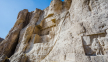
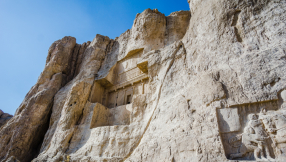
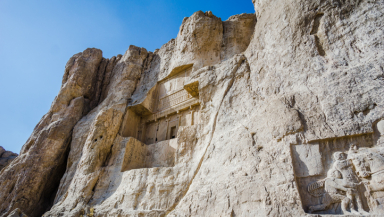
Iran has the tombs of the Persian kings who feature in the Bible. The tomb of Cyrus the Great is located in Pasargadae, in Fars Province in Iran, and is a UNESCO World Heritage Site. The tombs of the later Persian kings - Xerxes I, Darius the Great, Artaxerxes I, and Darius II - are cut into the mountain near Naqsh-e Rostam, near Persepolis in Fars Province.
Iran also reputedly has the tombs of some biblical figures. In Susa (ancient Shushan) is a site believed to be the tomb of the prophet Daniel. In Hamadan (ancient Ecbatana) is a site believed to be the tomb of Esther and Mordechai. These are visited by pilgrims from different Abrahamic faiths. Marco Polo even claimed to have visited the tombs of the Magi in Saba (Saveh), near Tehran, although whatever he saw has not survived.
Summary
Persians are found throughout much of the Bible, and some biblical accounts are set in what is now Iran. There has been an ancient Jewish presence since the time of exile and an ancient Christian presence since Pentecost, both of which continue today. Historic Orthodox Churches have existed for many centuries as minority communities, and there are places of pilgrimage important for Jews and Christians.
Today, there is a great revival among Iranians, with growing interest in the Bible, and many are coming to Christ within and outside Iran. Sadly, in times of war with the West, it is often the local Jewish and Christian communities in the Middle East - who otherwise live in peace with their neighbours - who bear the brunt of reprisals and persecution, as scapegoats or through association with political conflicts to which they are not party.