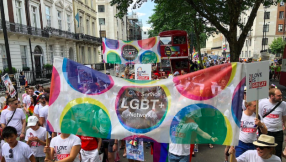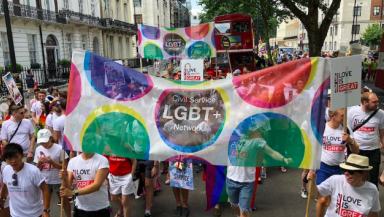
The Christian Institute has initiated legal proceedings against Keir Starmer in a bid to end civil service participation in controversial Pride marches.
The move follows similar action earlier this year which succeeded in ending Northumbria Police’s involvement in Pride.
Starmer has been named in the proceedings due to his position as Minister for the Civil Service.
In July of this year a judge ruled that the participation of uniformed police officers in a Pride event had been unlawful. That decision came in response to a case brought by a gender critical lesbian, Linzi Smith, who argued that police participation in a Pride march indicated support for a specific political ideology and that consequently members of the public could not trust the police to fairly adjudicate disagreements relating to that ideology.
The Christian Institute is hoping that this principle can now be applied on a much greater scale. The group argues that allowing civil servants to attend Pride marches while on the clock - and hence at taxpayers' expense - and brandishing “Civil Service pride” slogans, constitutes a breach of civil service impartiality.
Conrathe Gardner LLP and Tom Cross KC, who won the Northumbria case, have been deployed by The Christian Institute for their legal action.
Simon Calvert, deputy director of The Christian Institute, said, “The law is clear that civil servants must maintain impartiality on controversial political issues. Whether one agrees with it or not, no one can deny that the LGBTQ+ Pride movement and its hard-line gender ideology are profoundly political.
“Pride London, the one attended by Whitehall-based civil servants, even banned political parties because they don’t support their political demands, which include puberty blockers and gender self-ID. These are positions which the taxpayers who fund the Civil Service increasingly reject.”
Calvert noted that despite the highly contentious nature of the LGBT movement, government departments are far from shy about showcasing their involvement in such causes.
“I have been working in public policy for decades. I’ve been shocked by how many civil servants wear Pride lanyards in our meetings with them, even when those meetings are specifically about conflicts with that ideology," he said.
“Sitting in front of a phalanx of civil servants in rainbow lanyards gives the impression that their minds are closed on the issues we are discussing. It certainly does not communicate the kind of neutrality that taxpayers expect of civil servants.”
If successful, the case could impact civil servants across all nations of the United Kingdom.