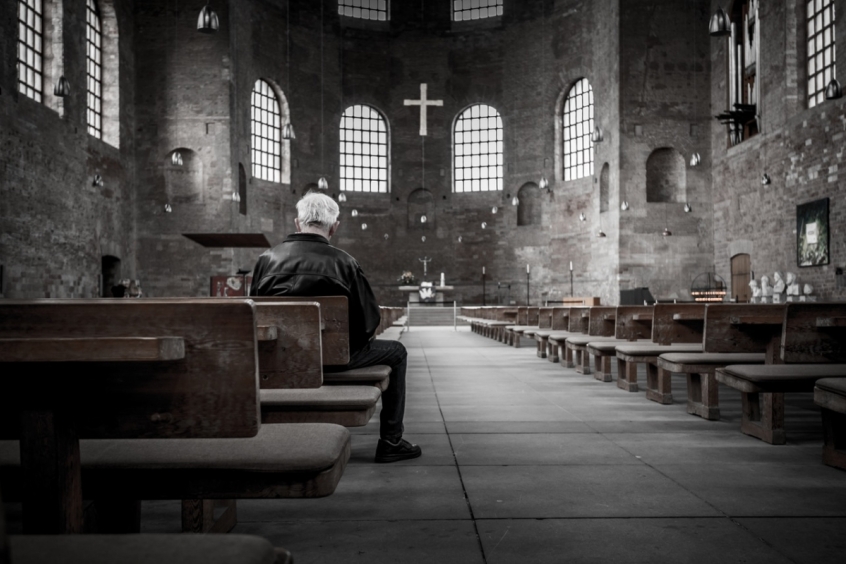
You've probably heard of Christians whose automatic response to everything is "pray harder." I believe in prayer and we all should, but what does praying harder really look like and does it really help? To most the idea of praying harder translates to praying longer, praying the right words or even prayer with fasting. Prayer works no doubt and all Christians should grow more and more in prayer, but there is a problem with this mindset.
I remember this story of a boy who found a lamp that had the inscription "I'm a magic lamp" written on it. Excited, the boy starts rubbing it but nothing happens. He rubs and rubs non stop until his palms swell up. Finally giving up he tosses it aside only to have seen another inscription on the backside saying, "off duty."
In so many ways, many Christians are like that young boy, when God doesn't give us what we want, we pray harder, longer or louder. God is never off duty, but Jesus did once say in Matthew 6:7, "And when you pray, do not heap up empty phrases as the Gentiles do, for they think that they will be heard for their many words." Prayer is not really about how hard you pray and how long you pray. It's not even about how much faith you have. So what is it about?
It's about God's faithfulness
Deuteronomy 7:9 says, "Know therefore that the LORD your God is God, the faithful God who keeps covenant and steadfast love with those who love him and keep his commandments, to a thousand generations." Sometimes in our impatience and selfishness we try to hard wire our requests in hopes that we can help God get His provision out to us faster.
In our faithlessness many times we forget that God is faithful and that He works all things according to our good (Romans 8:28). We don't have to help God get our prayers answered. If He promised it and He knows that you need whatever you ask for, He will give it to you. Let's not be children who ask for "scorpions and stones" (Matthew Luke 11:12), but trust in the Father who gives "bread and eggs."
It's about God's will
1 John 5:14 promises, "And this is the confidence that we have toward him, that if we ask anything according to his will he hears us." God hears and answers our cries, but it must be according to His will. Why? Because it's His will that is good, pleasing and perfect.
God knows best, and He knows way better than we do. When He delays or stops a request, it's for a good reason and we are to trust that He only wants the best for us. If there is a promise and it's not there know that He is never too early and never too late. He is just on time.
Prayer is important, but it's not just a request form that we fill out and pass on to God. It's more importantly a time to commune and be thankful and to communicate our deepest trust towards Him even when the answer to our prayer is "wait" or "I have something better for you."