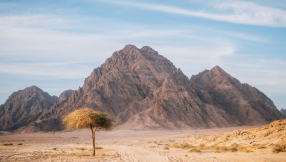
There's a fascinating story in Exodus 17 about Moses and prayer. The Israelites are fighting against their enemies the Amalekites, and Joshua, the battle commander, is in charge of the fighting. Moses stands on top of a hill with his arms outstretched in prayer, but it's very hard to stand in that position for long. When his arms begin to droop, the battle goes against the Israelites. So the two priests, Aaron and Hur, give him a stone to sit on, stand one on each side of him and hold his arms up – and the Israelites start winning again.
There are at least three things we can learn from this story.
1. Prayer matters. Even in Christian undertakings, the people who get the fame and the glory are the ones who are visibly at work in the heat of the battle. Moses is removed, at a distance, on a hilltop, out of danger – but his prayers are crucial to the success of the warriors. One of William Cowper's hymns reflects on this event. He says:
Restraining prayer, we cease to fight;
Prayer makes the Christian's armour bright;
And Satan trembles when he sees
The weakest saint upon his knees.
2. Prayer is hard. Moses was physically tired, but his physical weariness symbolises something about prayer. He was pouring all his spiritual energies into a battle, and it was hard for him to keep going. He needed help on his hilltop just as the warriors in the valley did. Who are the Aarons and Hurs in your church? They might be people who aren't eloquent in prayer, but faithfully support those who are; who encourage with their presence and their attention.
3. God honours faithfulness. There's nothing magical about what Moses did. The story is there to teach us about how we are to pray today. A casual, lighthearted approach to serious issues is unlikely to engage God's attention. Costly prayer, like Moses', is a way of showing our commitment to the outcome. It does not mean God will necessarily answer in the way we want, but it honours him by its seriousness.
Follow Mark Woods on Twitter: @RevMarkWoods