
Prime Minister David Cameron's speech on Friday at Christ Church Cathedral, Oxford, in support of the Bible surpasses in significance Mrs Thatcher's speech to the General Assembly of the Church of Scotland in 1988.
That is not because its moral and intellectual quality surpasses Mrs Thatcher's. On that score the two are probably on a par.
Mr Cameron's surpasses Mrs Thatcher's because of its timing.
When Mrs Thatcher spoke out in defence of Christian values, Britain had not yet seen the full flowering of the spiritual and moral corruption unleashed by the 1960s.
Now we have, with the crisis of morality in the financial system exposed in 2008 and this summer the fatherless anarchy that devastated Britain's cities.
So, it is the timing as well as the moral and intellectual force of Mr Cameron's speech that makes it truly historic.
Christian blogging genius Archbishop Cranmer has reproduced the speech in full and it merits careful reading by all thoughtful Christians concerned about the spiritual and moral future of the country we love.
Two extracts suffice to show its significance, the first of which skilfully tips the lance towards Mrs Thatcher's concern about the corroding effect of the secular attack on Christian values:
The Bible has helped to shape the values which define our country.
Indeed, as Margaret Thatcher once said: "We are a nation whose ideals are founded on the Bible."
Responsibility, hard work, charity, compassion, humility, self-sacrifice, love, pride in working for the common good and honouring the social obligations we have to one another, to our families and our communities.
These are the values we treasure.
Yes, they are Christian values.
And we should not be afraid to acknowledge that.
But they are also values that speak to us all - to people of every faith and none.
And I believe we should all stand up and defend them.
Those who oppose this usually make the case for secular neutrality.
They argue that by saying we are a Christian country and standing up for Christian values we are somehow doing down other faiths.
And that the only way not to offend people is not to pass judgement on their behaviour.
I think these arguments are profoundly wrong.
And being clear on this is absolutely fundamental to who we are as a people, what we stand for, and the kind of society we want to build.
First, those who say being a Christian country is doing down other faiths simply don't understand that it is easier for people to believe and practise other faiths when Britain has confidence in its Christian identity.
Many people tell me it is much easier to be Jewish or Muslim here in Britain than it is in a secular country like France.
And then arguably the most morally incisive section of the speech:
Put simply, for too long we have been unwilling to distinguish right from wrong.
"Live and let live" has too often become "do what you please".
Bad choices have too often been defended as just different lifestyles.
To be confident in saying something is wrong is not a sign of weakness, it's a strength.
But we can't fight something with nothing.
As I've said if we don't stand for something, we can't stand against anything.
One of the biggest lessons of the riots last summer is that we've got stand up for our values if we are to confront the slow-motion moral collapse that has taken place in parts of our country these past few generations.
British Christians now face the task of persuading Mr Cameron that Coalition plans to introduce same-sex marriage would be contrary to the Bible and would greatly damage the spiritual and moral future of our country, about which he is genuinely concerned.
We also face the challenge of showing that Christianity is not primarily a moral philosophy or an ethical underpinning for society or a foundation for political ideals.
Christianity is first and foremost an intensely personal encounter with the Lord Jesus Christ, the God Incarnate who says: 'Follow me.'
60% OFF
GKBK Women’s Ribbed Short Sleeve Scoop Neck Slim Fit Tee – Stretchy Basic Summer Top 2026 Trendy Outfit Essential
$4 $9.99
75% OFF

Bluetooth Smart Scale for Body Weight - 13 Health Metrics with BMI and Muscle Mass (Black)
$19.99 $79.96
40% OFF

AZDOME GS63Pro 4K Dash Cam: 40% Off - Ultimate Driving Companion
$47.99 $79.99
60% OFF

Ekouaer Women's Satin Silky Pajama Set - Short Sleeve Pullover Top & Wide-Leg Pants
$13.99 $34.99
40% OFF

ANCHEER 38'' Toddler Trampoline - 150lb Capacity Foldable Mini Trampoline with Adjustable Handle
$47.99 $79.99
55% OFF

Ekouaer 3-Piece Maternity & Nursing Pajamas Set - Short Sleeve Top with Shorts and Pants
$14.99 $32.99
Wahl Professional 5 Star Series Magic Clip Cordless Clipper - Stagger-Tooth Blade Hair Trimmer
$0 $139.99
10% OFF

Bekrvio Swivel Counter Height Bar Stools Set of 3 - 26" Mid Century Modern Rattan Back Stools
$223.55 $248.39

Gardner Pet 43" Heavy Duty Dog Crate with Wheels - Indestructible Folding Metal Cage (Black)
$0 $149.99
12% OFF

Elegant Mid-Century Modern Bar Stools - Set of 4
$395.99 $449.99




-

Understanding the reasons for the conviction of Päivi Räsänen
-

Report warns of continued anti-Christian hostility across Europe during April
-
Christians petition for protection of pastors in Colombia following murders
-
Pastor Greg Locke's 20-year-old son dies from drug overdose
-

Who was Mother Julian of Norwich and why is she important?
-

Young Christians engaging with Bible more, survey finds
Most Popular
News

Churches urged to help address UK fostering shortage
Christian charities Home for Good and Safe Families UK are calling on churches across Britain to play a greater role in supporting vulnerable children.

Christians urge UN to keep human rights spotlight on Eritrea
Eritrea is sometimes called the "North Korea of Africa".
Many churches unconcerned about food ethics, survey suggests
A survey conducted on behalf of environmental charity Green Christian has suggested that only a minority of churches take into account ethical concerns when serving food and drink.
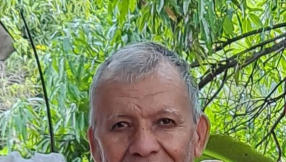
Calls for investigation into disappearance of Protestant missionary in southern Mexico
The 79-year-old Protestant missionary has been missing for more than six weeks.
GKBK Women’s Ribbed Short Sleeve Scoop Neck Slim Fit Tee – Stretchy Basic Summer Top 2026 Trendy Outfit Essential
$4
Bluetooth Smart Scale for Body Weight - 13 Health Metrics with BMI and Muscle Mass (Black)
$19.99
AZDOME GS63Pro 4K Dash Cam: 40% Off - Ultimate Driving Companion
$47.99
Ekouaer Women's Satin Silky Pajama Set - Short Sleeve Pullover Top & Wide-Leg Pants
$13.99
ANCHEER 38'' Toddler Trampoline - 150lb Capacity Foldable Mini Trampoline with Adjustable Handle
$47.99
Ekouaer 3-Piece Maternity & Nursing Pajamas Set - Short Sleeve Top with Shorts and Pants
$14.99
Wahl Professional 5 Star Series Magic Clip Cordless Clipper - Stagger-Tooth Blade Hair Trimmer
$0
Bekrvio Swivel Counter Height Bar Stools Set of 3 - 26" Mid Century Modern Rattan Back Stools
$223.55
Gardner Pet 43" Heavy Duty Dog Crate with Wheels - Indestructible Folding Metal Cage (Black)
$0
Elegant Mid-Century Modern Bar Stools - Set of 4
$395.99