There was a period, not so very long ago, when the internet was going to be the saviour of truth. Back in 2000, for example, the then American President, Bill Clinton, anticipated that the internet would prove beyond the grasp of authoritarian regimes, and used the memorable aphorism that controlling the internet would be like trying to "nail jell-o to the wall".
With the internet, so the logic went, there would be nowhere for governments to hide, the facts would be out there, beyond the control of the censors. Brainwashing would soon become a relic of the past. Seventeen years later no one could have anticipated the remarkable success of the Chinese state at suppressing the internet, but that is only part of the story. The greater irony is that even in the free West the internet has gone from saviour of truth to the great bête noire, the prime home of 'post truth'.
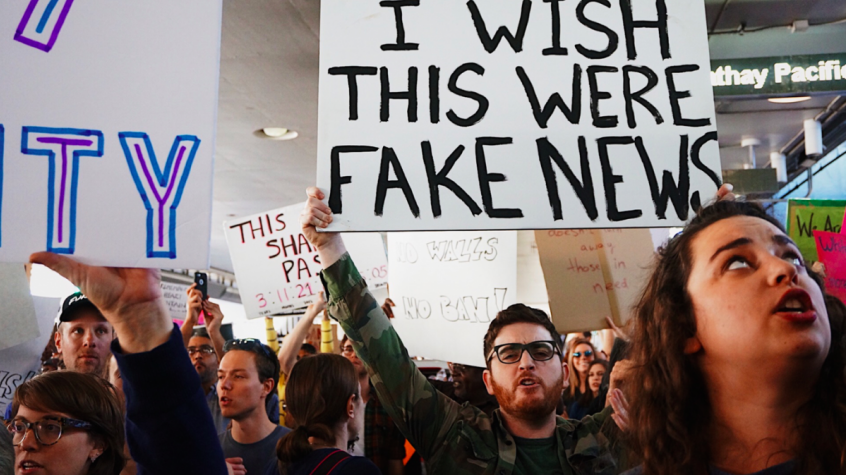
Instead of the free, democratised and unstoppable truth, now we are assailed with dubious factoids and bot-generated propaganda. The internet, or so the post truth argument often goes, has gone from saviour to oppressor, it is now the ultimate tool in spreading lies and misinformation to a helpless public.
The reality, as so often, lies somewhere between the poles. I suspect much of the fear over 'post truth' online is tied to a failure of the utopian expectations for what the internet was supposed to be.
We should perhaps ask whether these utopian expectations – a sort of sci-fi dream of knowledge and truth – were ever plausible. Is the problem not with the tool but with human nature? The internet has made all the world's knowledge democratised and consumerised. But therein lies a problem. Democracy only functions when people are motivated to contribute and hold their representatives to account. Consumerism assumes people will be rational and find the product that best suits their needs.
Neither of them function when we are all too lazy, complacent and weak to challenge anything. Internet algorithms are not random. Increasingly they only show us messages and stories that conform to what we want to see and do nothing to puncture our own complacent pre-conceptions. This ought to force us to ask, is the world now simply more dishonest than ever before, or have we simply, finally got the media that we deserve?
The truth, as Scully and Mulder always told us, is out there. The internet still contains a vast repository of knowledge and wisdom, if only we had the courage and ability to correctly discern which aspects are true. What the internet utopians missed in their confident beliefs about the role of the internet puncturing authoritarianism, is that there is a difference between knowledge and truth. The availability of information is, of itself, no guarantee to truth. Christians, of all people, ought to recognise the truth of that.
We shouldn't be able to forget of course. The symbol that stares back at us from every Ipad, Iphone and Mac you may recognise – it's the apple from the tree of knowledge, with a bite taken out of it. That should be the warning we need – if you place all your hope for truth in technology and the internet you are truly on a hiding to nothing. The only wonder is that it has taken us all so long to recognise that.
Ben Ryan is Researcher at the Christian think tank Theos, which last night hosted James Ball at an event on fake news, faith and the future of democracy. Follow on Twitter @TheosThinkTank