At St Cuthbert's North Wembley we have a long history of being a charismatic evangelical church. So why should our new Celtic service be so popular and drawing in people from near and far? It seems to resonate with seekers and with the most surprising people within our congregation.
Just what has the Celtic tradition got to offer evangelicals? Are there any pitfalls?
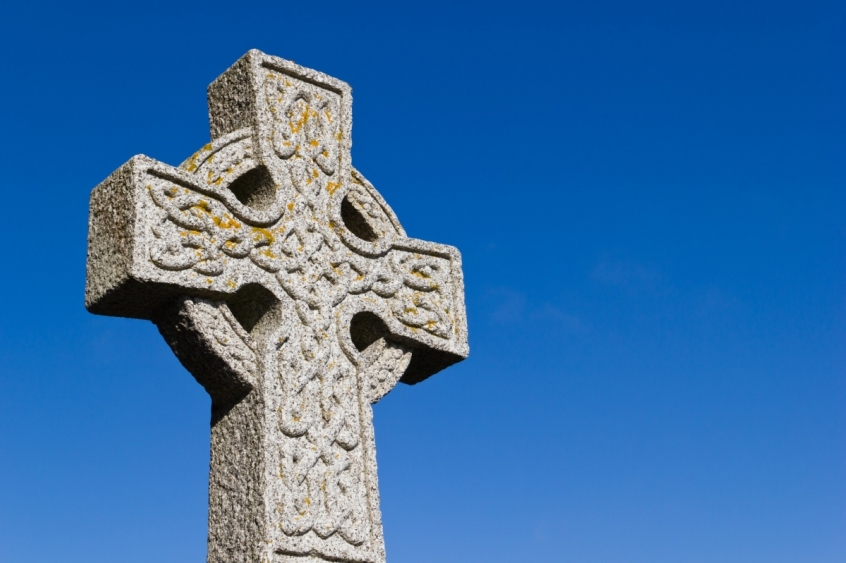
On the minus part of the equation I have heard people say that some Celtic liturgy is a bit wordy – and that's certainly true. Some of the more recent output from the Celtic publishers is just bad poetry. Others comment that they find Celtic spirituality is in danger of worshipping nature rather than God. It is certainly true that if badly handled the Celtic fringe can become a bit 'new-agey'.
But these are relatively trivial objections. All spiritual movements have a lunatic fringe and its fair share of duff poets.
Actually we have seen five attributes of the Celts that have added to what we normally do here at St Cuthbert's. My feeling is that Celtic spirituality adds to evangelical churches and attracts a whole new bunch of people.
The created universe reveals God
Natural theology hasn't got that much of a look-in with evangelicals. Someone once described this to me by saying that evangelicals can get a bit human-centric.
The Celts had a keen sense of nature and the seasons. Modern folk respond very warmly to this and they often discover a strong sense of gratitude to God in their wonder of nature – a wonder shared by people like our own dear Celtic saint St Cuthbert. Cuthbert loved animals and, indeed, his life was saved by wild creatures. We modern folk also have a wonder at animals that sometimes gets a bit lost in the hullaballoo of a charismatic noise-fest.
Conservative evangelicals could do with a bit more poetry in their souls
Now I'm clear on one thing, especially after my wonderful time at Wycliffe Hall Oxford: If there was a big spiritual war on I'd want a whole host of conservative evangelicals in the trench with me. I am a great admirer of my conservative brothers, but at times you do yearn for a bit of poetry. And The Celts have it in spades. All those long expository sermons can get a bit heavy.
The Celts experienced God in the everyday rhythms of life and work
A great deal of the best of the Celtic liturgy weaves in the everyday business of life with the life of prayer. Evangelicals have captured a bit of this territory with their understanding of God in the workplace. But for the Celtic Christians, God dignified every bit of their daily lives and therefore their prayers have a touching sense of God's imminence. Modern people respond to the God of the everyday – especially if they have a sense that God is distant and locked away in heaven. When they suddenly realise that God is in the everyday, their souls tend to sing.
The Celts understood silence
Celts didn't seem to babble. They were happy to be quiet and let God's peace descend on them. In our Celtic service here the time of silence leads to almost palpable gasps of joy.
They understood the need for protection from evil
Perhaps because the Celts based themselves in wild places a long way from anywhere they had a strong sense of the need to be protected from real visceral evil. The Celts have circling prayers for protection. They name the work of the devil and pray for protection. In our modern world we often feel that sense of peril and the prayers for protection strike home.
Steve Morris is the parish priest of St Cuthbert's North Wembley. Before being a priest he was a writer and ran a brand agency. In the 1980s he tried to become a pop star. Follow him on Twitter @SteveMorris214