Most people know the Bible doesn't say there were three wise men. But their three gifts, of gold, frankincense and myrrh, have led to the story being told that way. There might have been dozens of them; there might have been only two. And churchgoing Christians have been told often enough that the crib scenes in which they are there with the shepherds and the animals aren't really true to life, and not only because Jesus was probably not born in a stable; the wise men probably didn't arrive on the scene until as long as two years later, according to Matthew, when the shepherds would have been long back in their fields.
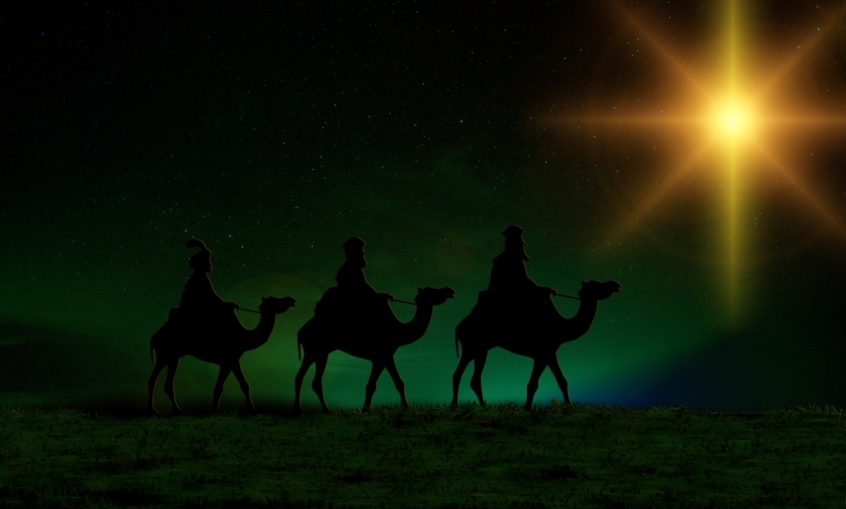
But who were they anyway, and why would they have made their long journey?
In the Western Christian tradition, they have been given names – Balthasar, king of Chaldea, Caspar, king of Tarshish, and Melchior, king of Nubia. But none of these are original; they're just examples of how frustrated story-tellers get when there's so little of a story to tell. They are not even called kings.
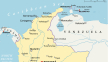
What does seem to be clear is that the magi – 'magoi' in Greek – are astrologers, 'wise men' in that sense. In the ancient world, they were not universally respected, certainly not by educated people who regarded the predictions of star-gazers as nonsense. In the Septuagint, the Greek translation of the Old Testament, the word 'magoi' is used of the magicians and sorcerers who advised King Nebuchadnezzar. These are failures, but they are there in the king's court, as powerful people: magi are people of consequence. Herod certainly takes them seriously. Perhaps, as some scholars think, they were Persians. Or they might have been from Babylon, the direct descendants of Nebuchadnezzar's advisers. It's been suggested that their gifts of myrrh and frankincense indicate they came out of the Arabian desert.
Either way, they are led by their studies and by their angel-star to the birthplace of Jesus. The ancient world would have seen nothing odd in this; astrology was seen as compatible with Judaism and an indication of the coming Messiah.
We are missing the point, however, if we just concentrate on the history and puzzle over points of astronomy. There are two things at least that are worth noticing.
First, the magi represent the coming of the Gentile nations to do homage to the Jewish Messiah, with all their wealth, power and wisdom. This is forecast in passages like Psalm 72 and Isaiah 11: 1-10. The baby in the manger is the king of the world, and the magi symbolise his power over the wise and great just as the shepherds symbolise his care for the poor and humble. Every knee shall bow to Christ.
Second, they represent a real and urgent choice, made not just 2,000 years ago but one we all have to make every day. The magi have the choice of two kings to honour. One is Herod in Jerusalem; the other is Jesus in Bethlehem. It would have been easy for them to be taken in by the trappings of Herod's power and to stay in Jerusalem when they arrived. They knew, though, that their journey was not over. Geographically, it is only a short distance from Jerusalem to Bethlehem. Spiritually, they are a world apart. When they asked Herod where the Messiah was to be born, they were being politically foolish – no ancient king could tolerate such a threat to his authority – but spiritually wise, in realising that he was not their man.
And each of us has to make the same choice between the status quo – safety, respectability and influence – and Christ, who asks us to sacrifice all of these to him.
It's fascinating to think of who the magi were, where they came from and why they came to worship Christ. But the point is that today, the wise still seek him.
Follow Mark Woods on Twitter: @RevMarkWoods