The old jokes are the best ones. Week after week, a man prays that God will let him win the lottery. Months go by and nothing happens. In the end he cries out in frustration, 'Lord! What am I doing wrong? Is it because I don't have enough faith?'
And God said, 'No: it's because you haven't bought a ticket.'
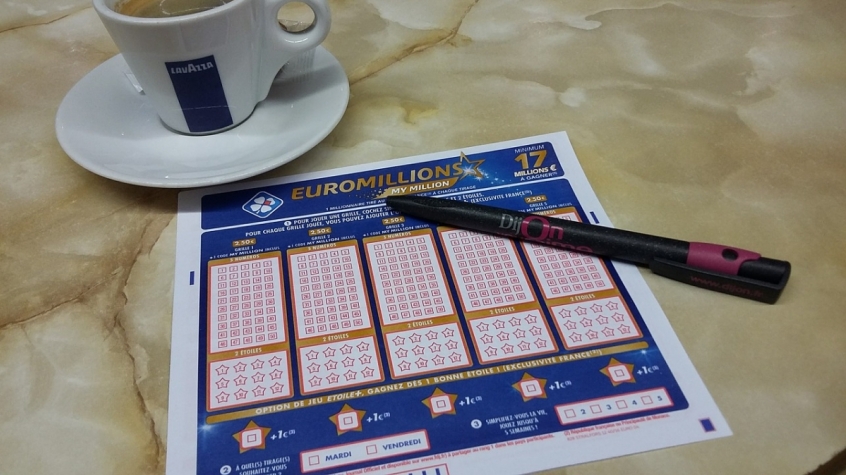
Somewhere in the UK, however, someone has bought a ticket and – perhaps – had their prayers answered. They have become the country's third largest lottery winner of all time, scooping a jackpot of £121 million. Peanuts compared to the largest win – £168 million – and even the second largest – £148 million – it's still not to be sneezed at.
The hope of a big win tempts many lottery gamblers. For the vast majority it's a bit of fun – they'll never win anything significant and they know it. 'Problem' gamblers are relatively rare, compared to the total, but yes, gambling does wreck lives.
But what happens when people do win? Does it make them happy? Up to a point, yes – for most people, many of our woes are financial ones, and if we had money we wouldn't have those. We'd have plenty of others, though. Money can't make us happy; it can only remove a few causes of unhappiness, and generate a few more besides. It brings new responsibilities; it can lead to the fracturing of friendships and the feuding of families; it brings the burden of choice when there was previously only the routine of the working week. Plenty of people might say, 'Thanks, we'd love to try some of that' – but they are real challenges, nevertheless.
We don't know anything about the latest winner; certainly nothing about any religious faith they might have. But the thought of that sudden deluge of cash falling on his or her head is sobering. Does the Bible have any wisdom for them?
In Proverbs 30: 8-9 it says: 'Keep falsehood and lies far from me; give me neither poverty nor riches, but give me only my daily bread. Otherwise, I may have too much and disown you and say, 'Who is the Lord?' Or I may become poor and steal, and so dishonour the name of my God.'
Too little money is no good. It doesn't necessarily lead to theft. But it is morally draining; the temptation to cut corners to secure a small benefit can be overwhelming. But counter-intuitively, the Bible says too much money is no good either. It has moral challenges too: it stops us feeling we need God, says Proverbs – and it might stop us feeling we need other people, too, we might add.
The advice the Bible might give to our lottery winners, then, may be a bit unpalatable: get rid of it, or most of it. There are plenty of worthy causes out there. Give wisely and well. Keep enough to keep you out of trouble, and to give you some enjoyment and security – but don't rely on it to make you happy, because it won't.
And if you find your money is making you miserable – and that happens, too – there's always the Jesus option: 'Sell everything you have and give to the poor, and you will have treasure in heaven. Then come, follow me' (Luke 18:22).
Follow Mark Woods on Twitter: @RevMarkWoods