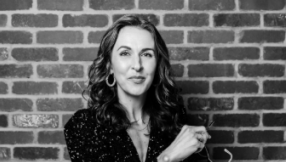
Jon Yates launched his new book, 'Fractured', via a lunchtime webinar hosted by the Theos think tank on Thursday.
Joined by Dr Madeleine Pennington, Head of Research at Theos, Yates delved into the topic of his book - divisions within society.
"Half of British people today feel that their country has never felt so divided. We can see evidence of this in our own friendship groups," he said.
"Half of Brits with degrees do not have a single friend who doesn't have a degree. The vast majority of pensioners do not mix with anyone or have any contact with anybody who is a millennial, unless they are their grandchildren.
"The biggest divide of all remains income or class."
Yates, Executive Director of the Youth Endowment Fund, explained that a "common life" is what historically united people. This way of life was particularly prevalent in agricultural society where community gatherings were frequent.
"Religious services were connecting people together, people they didn't choose to spend time with," he said.
"Then when we moved into cities we see another common life spring up, you see the birth of clubs and societies. Nearly all the clubs that exist today from the scouts to the guides, freemasons and boys brigade, all broadly date from the early period of the industrial revolution.
"They sprung out of nothing and provided a space where we mixed with people we didn't choose, we just turned up and met people and bonded together".
Why have we become divided?
Yates said that the reason for division today is the decline of society's common life.
"We still have to go to school and go to work, but now we tend to choose where we send our children to school. We now have a lot of choice as to where we go to work," he said.
He continued, "The more we choose where we send our children to school, the more we choose where we work, the more we should expect these institutions to become full of people who are quite similar.
"In publishing this book I hope to start the journey for the idea of a mandatory common life to bring us all back together."
Asked about the role of religion, and how faith and belief could be a part of the solution, Yates said, "I do think there is a slight tendency to think if we just ban religion then everyone would agree. That definitely doesn't seem likely. I don't see a secular society as one where everybody has the same view on everything."
He continued, "It is also important to note when we think about a common life, religious gatherings can play an important role.
"Places of worship are often one of the few places in society where people mix across ages. They are one of the few places where you can see mixing by different education levels."
Yates also touched on the role that the Church specifically must play in uniting people.
"Churches tend to be dominated by people who are older, by people who have got graduate degrees, and they tend to not have a great record of mixing people from ethnic backgrounds," he said.
"We do need to challenge those of us who are involved in places of worship.
"I think there is a huge role for religion to play while at the same time people need to be self-critical about how we use the institutions that we have to make them as effective as possible."