Palm Sunday is the Sunday before Easter, when Christians remember Jesus riding into Jerusalem on a donkey.
It was the moment at which his crucifixion and death became inevitable, because he was entering a very dangerous environment: Rome was full of Jewish pilgrims there to celebrate Passover, national feelings were running high and things were very volatile.
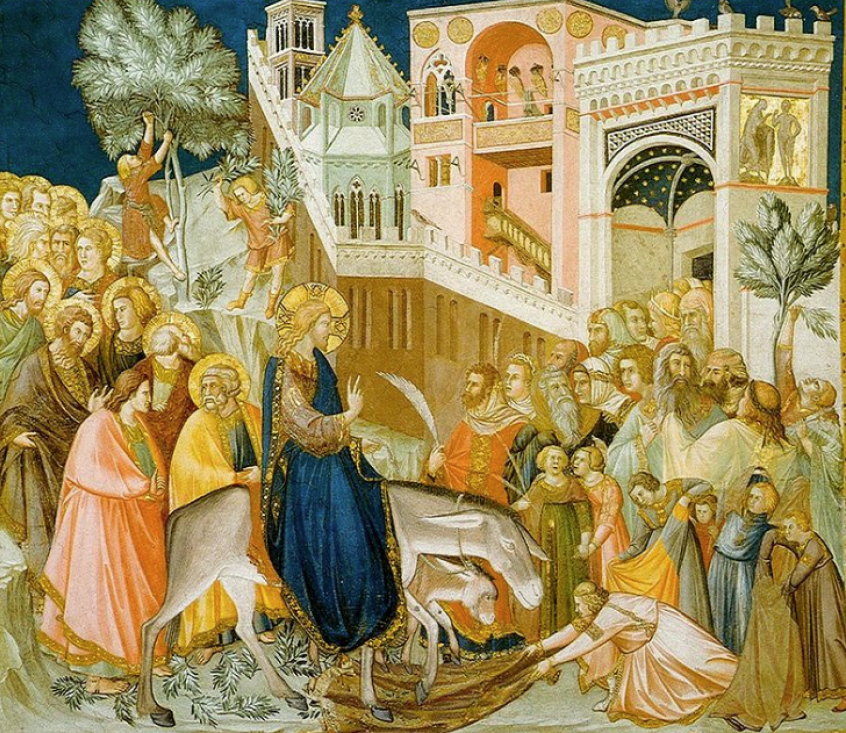
Each of the four Gospels tells the story, and each of them is slightly different.
Matthew 21: 1-11 says Jesus got his disciples to get a donkey and her colt from the village of Bethphage on the way to the city and links it with a prophecy in Zechariah 9:9. He says a large crowd gathered and spread their cloaks on the road and cut branches from the trees. They sang 'Hosanna' as he passed by.
Mark 11: 1-11 has the same story in slightly different words, only with just the colt and without the reference to Zechariah's prophecy. He also mentions Bethany as well as Bethphage.
Luke 19: 28-44 mentions both villages. It adds that some of the Pharisees asked Jesus to tell the disciples to be silent; he said, 'If they keep silent, the stones will cry out.' Luke tells us Jesus wept over Jerusalem.
John 12: 12-19 has the least detail, but is the only version specifically to mention palms. It says Jesus 'found' a young donkey and doesn't mention the villages.
It is a very rich story, but here are three things we should note.
First, by riding in on a donkey Jesus was showing what kind of claims he was making. He was not entering the city as a conqueror who would compel people to do his will; he was a different kind of king altogether, who came in peace.
Second, the people recognised something different about him, even though he was surrounded by a ragged troup of disciples and riding a nondescript animal. They spread cloaks and branches before him in an echo of the Roman practice of welcoming a god.
Third, he entered willingly, knowing he was going to his death and knowing that some of those who were cheering him on Palm Sunday would be calling for his execution on Good Friday. Yet he accepted their praises, in a sign of his grace towards sinners.