In John's account of his long address to his disciples before his betrayal and crucifixion, Jesus describes himself as the 'true vine' (15:1). He goes on: 'Remain in me, and I will remain in you. No branch can bear fruit by itself; it must remain in the vine. Neither can you bear fruit unless you remain in me.'
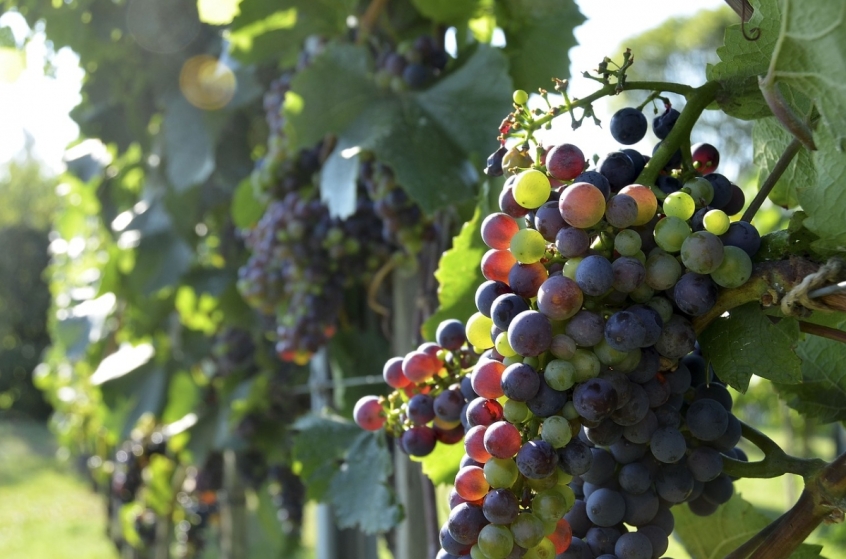
These are amazingly deep and thought-provoking words. They may lie behind the thought expressed in a classic hymn written on this day in 1872 by the English hymn-writer Frances Ridley Havergal.
It begins:
Lord, speak to me, that I may speak
In living echoes of Thy tone;
As Thou hast sought, so let me seek
Thy erring children lost and lone.
Its subsequent verses ask God to 'lead me, Lord, that I may lead/ The wandering and the wavering feet'; to feed, strengthen, teach, give rest and 'fill me with thy fulness'. It concludes:
O use me, Lord, use even me,
Just as Thou wilt, and when, and where,
Until Thy blessed face I see,
Thy rest, Thy joy, Thy glory share.
The thought in each verse is the same: that we cannot give anything good to others until God has first given it to us.
When Havergal wrote it, she entitled it 'The Worker's Prayer' and referred to Romans 14:7, 'For none of us lives to himself alone, and none of us dies to himself alone.' While the verse is not inappropriate and speaks of the responsibility we owe to one another, in context it's talking about something rather different from the theme of the hymn. What these wonderful lines say is more in accord with John 15: 'I am the vine; you are the branches. If a man remains in me and I in him, he will bear much fruit; apart from me you can do nothing' (verse 5).
In recent years there's been a very welcome commitment by evangelical Christians to making a difference in the world, not just saving souls. But a hymn like this reminds us that if we're to do that effectively and with integrity, it has to spring from a deep connection with Christ, the vine whose branches we are. If we lose that, our service degenerates into a sterile activism that will exhaust us and compromise our Gospel values. But: 'If you remain in me and my words remain in you, ask whatever you wish, and it will be given you' (verse 7).
Follow Mark Woods on Twitter: @RevMarkWoods