Is it possible that hundreds of Japanese Samurai were actually secret Christians who expressed their faith with codes hidden in their sword hilts? As far as the new findings of The Sawada Miki Kinenkan museum in Kanagawa Prefecture, Japan are concerned, the answer is "yes."
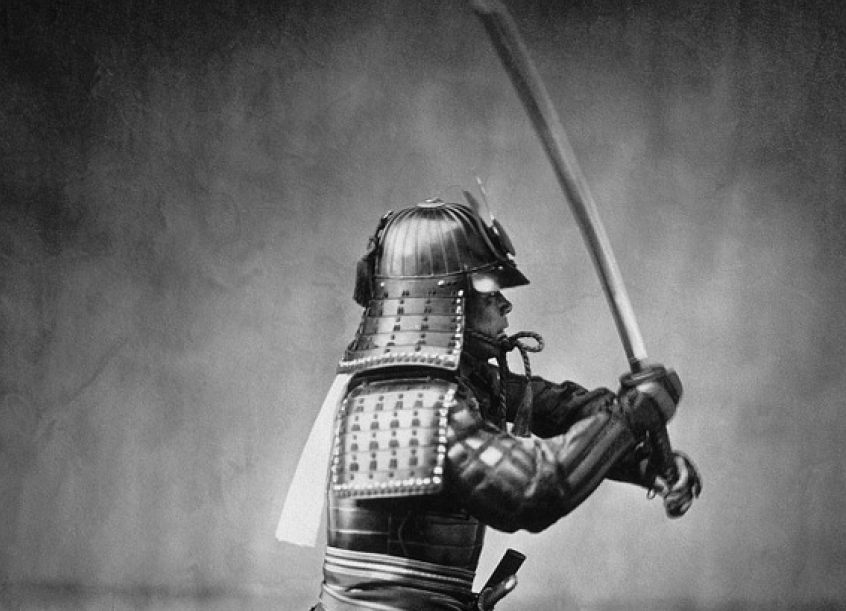
The Samurai were the military nobility during medieval and early-modern Japan. They were banned from following any form of religion after feudal Japan implemented anti-Christian measures in the 16th century, according to The Daily Mail.
But after the museum reviewed their swords, researchers discovered that the skilled swordsmen actually commissioned metalworkers to hide crucifixes and other religious symbols on their weapons.
The museum owns 367 samurai swords, 48 of them with displays of religious beliefs. The researchers have been reviewing the artefacts since last November.
"It is extremely rare to find sword guards with hidden Christian symbols used after the adoption of anti-Christian policies," a museum spokesman said. "The findings indicate that they kept their deep faith despite persecution."
Catholic missionaries introduced Jesus Christ to Japan sometime in the mid-1500s. Unfortunately, after 40 years of ministering, the missionaries, along with the Christian faith, were banned by military ruler Hideyoshi Toyotomi. He ordered the exile of these European missionaries while Japanese Christians were tortured and slaughtered in 1596.
Still, not all of the Catholics left Japan despite Toyotomi's strict order. They formed an underground religious network and disguised images of Jesus and Mary to look like Buddhas. As for their prayers, they made it sound like Buddhist chants.
Yuhiko Nakanishi, chairman of the non-profit group Nihon Token Hozon Kai, a Japanese sword preservation association, said the swords showed crosses, crucifixes, and other religious symbols that were creatively concealed in the elaborate designs.
"A characteristic of sword guards made after anti-Christian measures were taken is that Christians carefully hid crosses in their designs," he said. "We concluded the designs show the faith of hidden Christians."