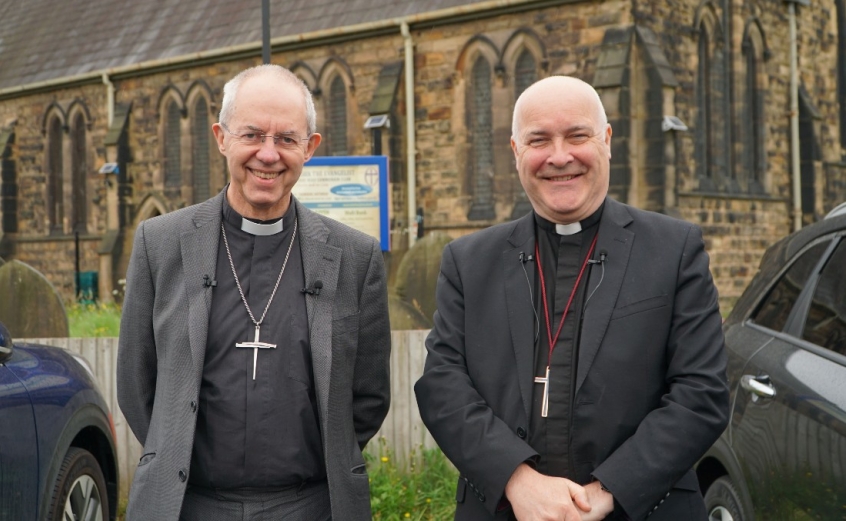
The Church of England is to invest billions of pounds in the next few years as part of a nine-year plan to scale up ministry and mission activity.
£1.2bn has been earmarked for the initial phase from 2023 to 2025, with a total of £3.6bn to be invested by 2031.
Investment will be focused on frontline ministry and the growth of new worshipping communities, with specific areas of concentration being the Church of England's 2030 zero carbon target, and initiatives aimed at young people, including schools and education.
Speaking to reporters, the Archbishop of Canterbury, Justin Welby, said that the funding would support the Church's aim of doubling the number of children and young disciples by 2030, and "aid the parish system in doing what the Church does at its best: making the love of God known to every person".
He called it a "historic moment" for the Church of England.
"This is a bold investment in the service of God, to proclaim Jesus Christ, to serve every single person in England," he said.
The Archbishop of York, Stephen Cottrell, said there was a need to invest in the future and grow a "younger and more diverse" Church by "trying new things" and establishing new Christian communities in local parishes.
"We have been in decline for a long while. That's the backdrop against which we're having this conversation," he said.
"But let's joyfully embrace the opportunity that this funding will give to try some new things, learn from each other and see more and more people in this nation come to know Christ."
The funding model will be "bottom up", with churches able to apply for funding for specific projects with a view to revitalising parish and local ministry.
Archbishop Welby said that the investment model would be "simpler" than in the past and that the "key" idea was "local communities, local priorities".
"Each diocese has its own particular priorities. London isn't Doncaster and Doncaster isn't Truro," he said.
Cottrell admitted that funding in the past had been "perhaps too driven from the centre" and that the Church had "learned" and was now trusting the dioceses more and "working in collaboration with them".
"We do want to de-centralise it a bit and work much more closely with parishes and dioceses," he said.
Welby added that while past funding had been focused on larger urban areas, the latest funding would include rural parishes.
"The Church of England is called to serve every community in the country, to be a presence that transforms lives and answers the call of God," he said.
"This funding will help local parishes and chaplaincies live out that calling, providing support for mission so every person might hear the Good News of Jesus Christ."