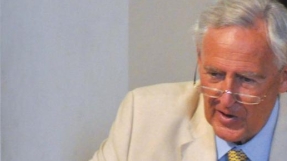
East Carolina University (ECU) reversed a chemistry professor's ban against students thanking God in their personal statements for their graduation ceremony.
Dr. Eli Hvastkovs received backlash after he emailed undergraduate chemistry students on May 1, instructing them not to mention God in their personal statements.
However, the University Provost and Senior Vice Chancellor for Academic Affairs, Marilyn Sheerer, countered the email the next day.
ECU's chemistry department has its own graduating ceremony following the university-wide commencement. At the chemistry ceremony, officiators read personal statements that the students write.
Sheerer explained the submission guidelines in a message to students.
"I have confirmed with the Chair of the Department of Chemistry that students may submit personal statements, up to 35 words, to be read during the departmental ceremony," she wrote in an email.
"These statements can be your personal expressions and as such the University will only limit these expressions, as permitted by applicable First Amendment law."
Sheerer went on to say that the speeches will only be banned if they contain hate speech, intimidating language, disruptive content, or are not submitted according to word count or deadline instructions.
She also told students to disregard Hvastkovs' unauthorized email.
"Religious references of any type will not be restricted. I regret that, without approval from the appropriate University officials, any other limitations were communicated to you," she said.
Dr. Hvastkovs, an assistant professor, explicitly forbade the graduating students from thanking God in his own email explaining the submission guidelines.
"You can't thank God. I'm sorry about this–- and I don't want to have to outline the reasons why," he wrote.
Hvastkovs also told students to write in third-person, and to keep the statements family-friendly.
After the backlash, he explained in an email to WITN Greenville that not thanking God was a request made by ceremony officiators who "were not comfortable thanking a God(s) on behalf of the students."
He also said that the request was not meant to offend, and was poorly worded.
"I feel terrible that there are ECU alumni that are emailing me and commenting on the message boards bad things about me-- and I wanted to say that I am a regular good person, who just sent a poorly worded, poorly thought out email. I am sorry," he wrote.
The ECU Department of Chemistry Commencement Ceremony will be held May 9 at 8 p.m. in the campus' Hendrix Theater.