UK medical professionals will today argue that abortion should be fully decriminalised, saying the country faces a 'crisis point in abortion provision'.
The Faculty of Sexual and Reproductive Health (FSRH), representing 16,000 GPs, nurses, midwives and medical specialists are today calling for the reform of UK law, according to The Times. It would include the removal of sanctions – which can include life imprisonment – for women who have abortions.
Terminations of pregnancy are still an offence in British law under the Offences Against the Person Act 1861. The 1967 Abortion Act provided exemptions legalising abortions in some circumstances – when two doctors approve and when mental or physical harm would be done if the pregnancy went ahead. Northern Ireland was not included in the legislation, where abortion remains illegal and intensely divisive – doctors may permit it 'only to save the life of the mother'.
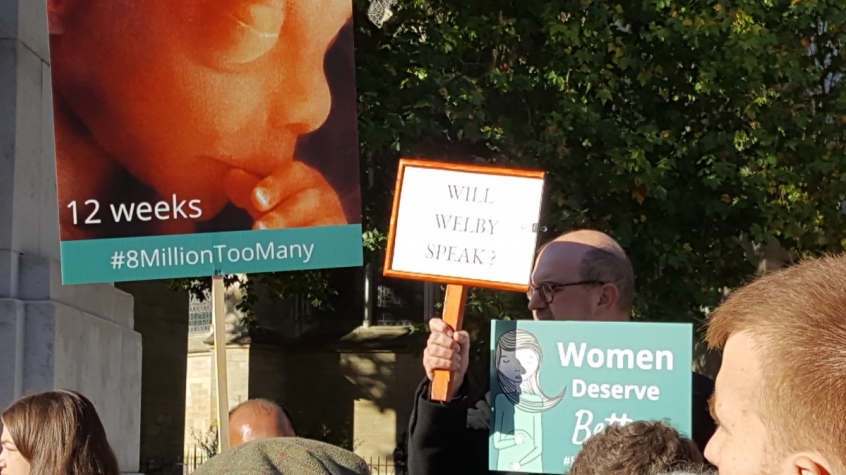
The landmark 1967 legislation saw its 50<sup>th anniversary last month, and has prompted calls for further reform, and debates on the matter amongst MPs. Pro-life groups have argued limits should be tightened, whilst pro-choice campaigners have called for their liberalisation – saying the health and freedom of mothers' is at risk.
'We are reaching a crisis point in abortion provision — that is one of the reasons we started looking at all this,' said Dr Asha Kasliwal, the president of the FSRH.
'More and more, we are finding that women are not able to get access to safe abortion care. Our experience is that women are facing barriers [caused by the fact that abortion is illegal], especially those in rural areas.'
She warned that medics were being dissuaded from training to provide abortions due to the prospect of criminal punishment, and that hundreds of women were made unsafe by having to buy abortion pills online instead of going through the NHS.
The FSRH is expected to vote in favour of decriminalising abortion today, though Kasliwal said the position was about 'decriminalisation, not deregulation'. Reforms would allow women to take abortion pills at home and receive better contraception access.
Kasliwal said the group had no position on foetus age limits for legal termination.
Earlier this month, Peter Williams, head of the Right to Life campaign group, said decriminalisation would mean 'either partially or completely removing abortion from criminal law, and thus abolishing most or all legal limitations on abortion. That means abortion on demand, for any reason, either up to 28 weeks, or up to birth'.
He told Christian Today: 'After 50 years of this inhumanity, which has killed 8.8 million unborn children, it's time for us to recognise the failures of the Abortion Act 1967 and reform our laws to increase protections and support for pregnant mothers and their babies in the womb.'