Two Dead Sea Scrolls never before displayed in public will be part of a vast exhibition of ancient artefacts from Israel going on display at a museum in Denver, Colorado, tomorrow.
The newly unveiled scrolls outline the rules for ritual purification and moral conduct that Jews have been following for thousands of years, according to the Israeli newspaper Haaretz.
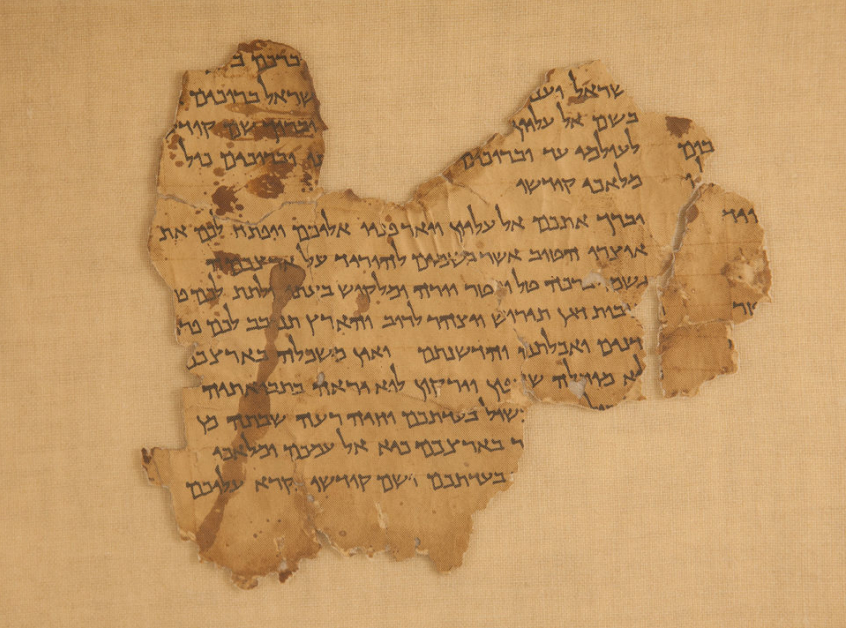
The Israel Antiquities Authority (IAA) revealed that the 600-piece collection includes 18 other scrolls which have been displayed before, and a three-tonne stone from the Western Wall in Jerusalem.
The exhibit also features items of daily life, including pottery vessels, stone kitchenware typical of ancient Jewish homes, pagan figurines that graced Jewish households during the First Temple period, well-preserved organic materials like leather sandals and food, religious jewelry and weapons.
Dr Uzi Dahari, deputy director of the IAA, explained: 'We want to show life in Bible times to the American public not through the biblical stories, but through real archaeological finds.'
The Dead Sea Scrolls, considered one of the greatest archaeological discoveries ever, were initially stumbled upon by Bedouin goat herders in 1947 in a cave on the shore of the Dead Sea near the site of the ancient city of Qumran.
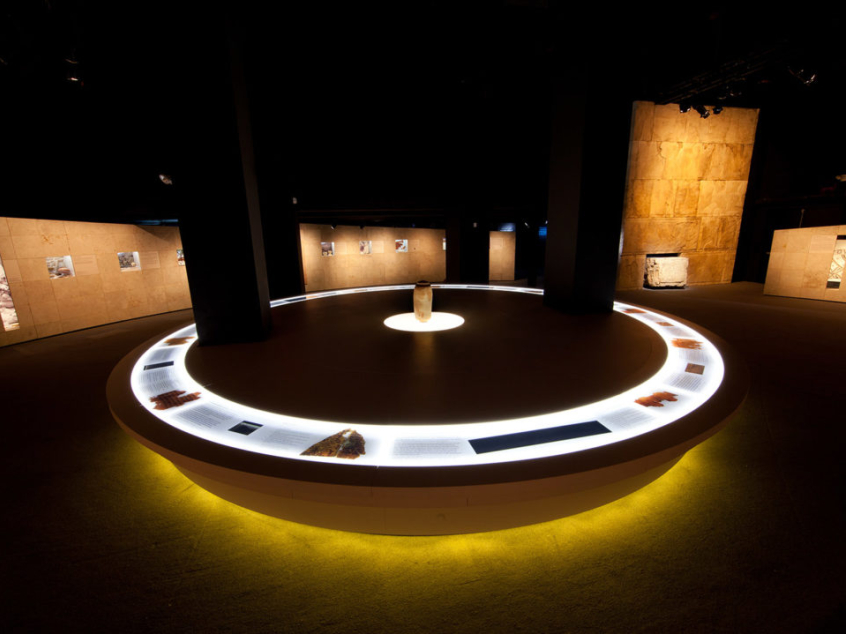
The extremely fragile ancient scrolls were written on both parchment and papyrus, and will be displayed at the Denver Museum of Nature and Science in a large display case with individual climate-controlled chambers for each document.
The IAA explained: 'The scroll on rules of ritual purity...was written in Hebrew at the end of the first century BCE and deals with matters of purity and impurity according to the Bible. Because only the ritually pure could deal with sacred matters, those who were ritually impure had to return to a state of purity. Ritual impurity could pass from an individual or object to another. To once again become ritually pure, certain actions had to be taken, such as ritual immersion or isolation for a certain period if the ritual impurity was caused by illness.'
The second scroll, on morality, known as the 'Instruction to the one who understands', also to be shown for the first time in the Denver exhibition, 'is part of a wisdom composition from the end of the first century BC,' the IAA said. 'It is similar in character to the biblical book of Proverbs, although it contains apocalyptic messages.
'Written by a teacher or a sage, it contains instructions to a disciple on the moral conduct that will enable him to avoid evil acts and achieve success in all areas of life and the high spiritual level attained by the most righteous individuals. The instructions for daily living include advice on fair business practices as well as on marriage.'