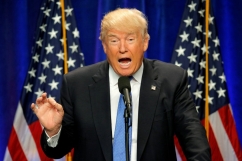
Even before he was declared as the official Republican Party nominee for the November 2016 U.S. presidential election, controversial businessman Donald Trump had already secured the support of some conservative Christian leaders.
Some top evangelical leaders, however, have joined forces with one goal: to show the world that not all conservative Christians are for Trump.
In its website, the group called "Public Faith" maintained that the combative approach of some conservative Christians to political issues, which Trump supports, will not yield good results.
"While we are grateful for the work many Christian political institutions have done, we believe that a traditional 'culture war' strategy often leads to bad policies, damaged witnesses, and compromised beliefs," the group stated, as quoted by Yahoo! News.
"Instead, we seek to support a just and flourishing society using the wisdom of biblical truths, Christian tradition, natural law, and the best of political thought," it added.
The group also encouraged Americans to still exercise their right to suffrage, even if they have not chosen a presidential candidate yet.
"We know that there may be candidates for specific political offices for whom as a matter of conscience, we cannot support with our vote," the group said in its vision statement.
"Even if some of us cannot choose one candidate for a specific office, we commit to participating as citizens by voting on Election Day, recognizing that there are many political offices and other matters on our ballots that are of tremendous importance to seeing the above named commitments enacted," it added.
Among Public Faith's 13 founding members are Michael Wear, former deputy director of President Obama's White House office of faith-based initiatives; Rev. Joel Hunter, a central Florida pastor who has been a spiritual adviser to Obama; and conservative-leaning author Alan Noble.
As for its policy stance, the group is still conservative when it comes to issues such as abortion and gay marriage, but is more progressive when it comes to issues like poverty, race and climate change.
For instance, on killing unborn children, the group said: "We believe that abortion must be opposed holistically, from the economic patterns that often drive the practice to the societal values that justify it. This includes caring for mothers throughout motherhood, advocating for adoption, and other policies that treat mothers, babies, and other family members as those made in the image of God."