Folklore has it that before the Norman conquest, on the banks of one of the many rivulets that eventually make their way into the seabound River Tyne, an apparition appeared. It was a vision of the Virgin Mary, holding the Christ Child.
The news travelled fast – pilgrims journeyed from far and wide for a glimpse of any lingering power, and St Mary's chapel was built to commemorate this holy moment.
Or so folklore has it. But whether or not you believe the story, the chapel changed the fate of the cluster of settlements which would one day become the great northern city of Newcastle Upon Tyne. The history of this spot can still be traced back through the etymology of local place names: the site of the apparition was creatively named "Jesusmound", garbled over time into Jesmond, a well-to-do suburb of the city.
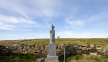
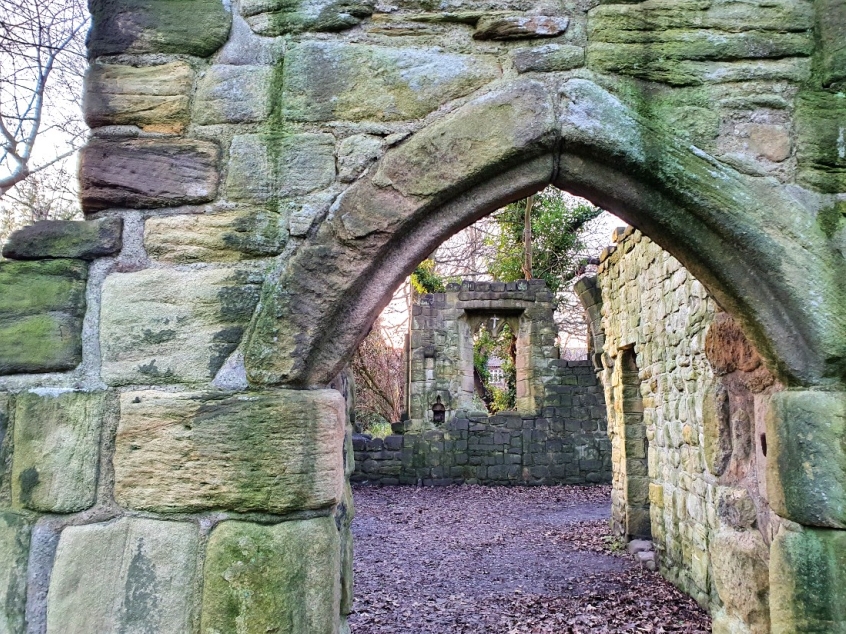
The chapel has always been a place of pilgrimage for the sick and grieving. I first stumbled across it during the first national coronavirus lockdown. Tucked away behind rows of housing and hidden by ivy in early March, it's the sort of place you can only find when lost. It's deeply quiet. The roof is long gone and trees crowd the tumbledown walls.
A stone's throw from the chapel is St Mary's well, a once-revered site of healing. The well is now almost buried, but the stone head at the entrance is still visible. Once engraved with the words Ave Maria Gratia Plena, it now reads only Gratia, erased by some zealous puritan sometime in its history. It's hard to believe this secluded ruin was once the centre of this city's identity.
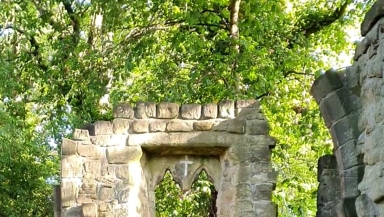
St Mary's chapel is in fact the oldest ecclesiastical building in Newcastle - according to the style of the chancel pillars, which have been dated to the early 12th century. The first recorded mention of the chapel is in 1272, but by then it had become an established and significant place of pilgrimage. It's a place of layered pasts: the early twelfth-century chancel arch is the oldest section, but three layers of construction were added to the building as it grew in popularity.
In the 14th century the chapel was enlarged twice and almost entirely rebuilt, doubling the size of the building. In the 15th century a chantry chapel was added, to help the flow of visiting pilgrims. Most notable now are the beautifully preserved piscinae in the south wall, which mark the placements of the three altars.
In its heyday, the chapel was considered among the most significant sites of pilgrimage in the country. In 1479 a rector from Yorkshire bequeathed a sum of money to the four greatest shrines in the kingdom, listing St Mary's Chapel alongside the great cathedrals of Canterbury and St Paul's. However, in the sixteenth century, the chapel was disendowed, dismantled and put to secular use, finally becoming a barn and stable.
Long after the rush of pilgrims ceased, the streets of Newcastle still bear their memory. Gray, the earliest historian of Newcastle, states in his Chorographia (1649) that the Pilgrim Inn in Pilgrim Street is named after lodging travellers on their way to St Mary's Well. Eventually the chapel passed into private hands, before being gifted back to the people of Newcastle in 1883 by Lord Armstrong.
And what is this place for the people? The trees make a better roof now, the fan-vault of arched branches. The floor is carpeted with leaves. In Maytime the hedgerows are laced with elderflowers. On summer evenings gold light slants through the empty windows. It's still a site of pilgrimage – local people leave flowers and beads in the piscinae, intercessions for the sick. Travellers linger in the old chancel, and wonder at the strangeness of such a building in such a place.
I return here too, to trace the years in the rock, and feel the weight of the prayers prayed here, and to look up at the sky and add my own layer to the voices here.