Scientists may be on the verge of discovering the DNA of Jesus Christ.
That's the revelation explored in a new History Channel documentary titled 'The Jesus Strand', in which a pastor collaborates with a scientist, exploring historical artefacts on the hunt for the DNA of Christ.
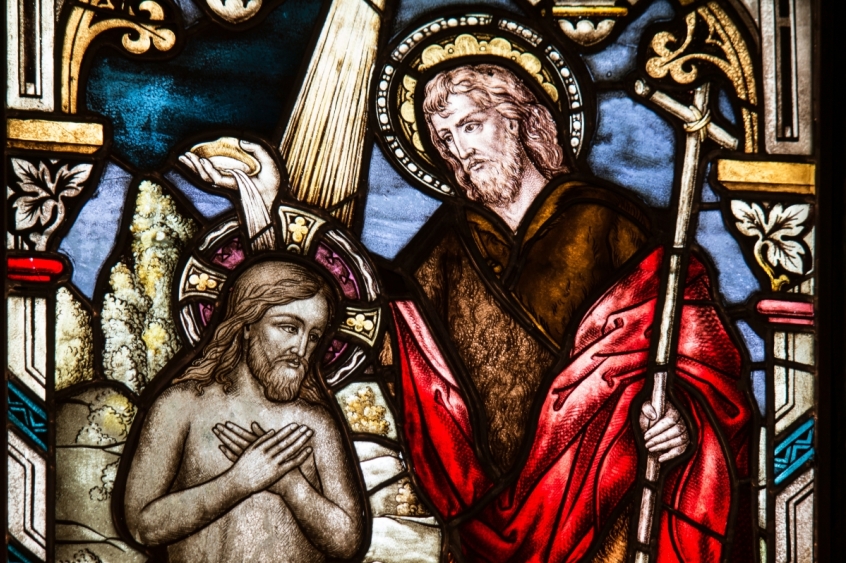
The most tantalising recent discovery is that of bones believed by some to belong to John the Baptist, Jesus' cousin. If the ancient saint's DNA could be recovered, it could point to Jesus' DNA since as the two were related they would share some genetic code, as the investigating geneticist George Busby explains on The Conversation.
Radiocarbon dating of John's bones – said to have been found in the remains of a 6th-century church off the coast of Bulgaria – showed them to be 2,000 years old, and DNA recovered from them matched that of Middle Eastern populations. However, there are some problems in the way of the quest.
The alleged St John relic has been contaminated by others' DNA over time: 500 years passed between John's death and the sealing of his remains in the church. That doesn't mean John's DNA – if it is indeed his – couldn't be isolated, but the relic just doesn't contain much DNA to work with. Research has now shown the bones to have been contaminated by those who excavated them, making the precise discovery of John's DNA from this relic increasingly unlikely.
But the investigation remains fascinating. If more DNA were discovered, if the DNA of John – and through that Jesus Christ – could be found, would it matter, and why?
1. Nothing can be proved
Even if you isolate an individual's DNA from a relic, it is impossible to prove that a belonged to a particular historical figure. In the case of John, we have nothing to cross-reference it with yet, and even if we did, we couldn't prove that either artefact came from John himself. The same logic applies with Jesus. There's no way to unambiguously verify ancient DNA. This quest, unfortunately, relies on intense speculation, and no actual proof.
2. But we can make progress
One of the marvels of modern innovation is that it can take us so far into the past. As technology improves and discoveries continue, there may be hope for real progress.
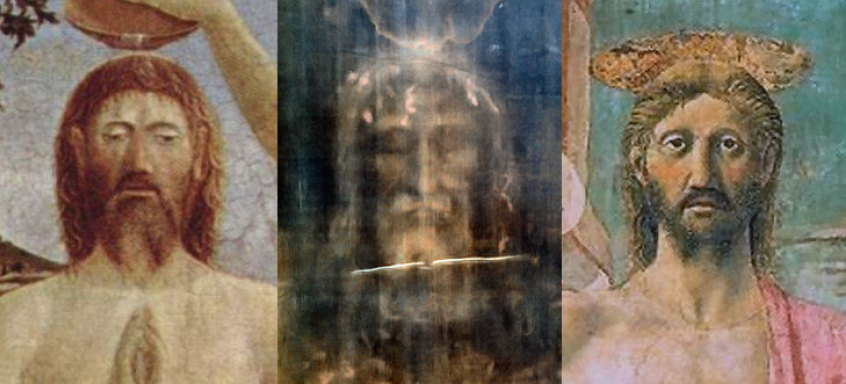
If more DNA evidence were discovered, and collated with that of the Turin Shroud – the cloth some believe was use to wrap Jesus' body when he was taken off the cross – and the alleged bones of Jesus' brother James, which some claim have also been discovered, some legitimate assumptions could begin to be made. Different relics could be used to verify original artefacts. It would still rely primarily on hypothesising, but DNA sequencing could be used to help provide some evidence about whether relics like the Turin Shroud are legitimate or not.
3. Could you find God's DNA?
There's a grand metaphysical question lurking behind this quest. What if you found the DNA belonging to the human Jesus Christ, whom Christians believe to be God incarnate? What if you found God's DNA? Would it not be the most astonishing of all discoveries?
Classical debates about Jesus' human and divine identity would return. Would there be any trace of 'divinity' in Jesus' human body? If there wasn't, would that mean Jesus wasn't 'fully' divine as the early Church decreed him to be?
What of the ethical implications – what would you do with the DNA? Human cloning hasn't been successfully achieved, but what would happen if you cloned Christ? The pious would surely never dare, but human beings – and scientists - are insatiably inquisitive. Someone might try.
4. So what?
Ultimately though this latest discovery – and even what might follow – doesn't take us very far.
The John the Baptist relic is interesting, but tells us little, and nothing for certain. Furthermore, we can't ever prove that we've found Jesus' DNA, and even we did find it, so what?
Jesus Christ, God incarnate, was a man who walked the Earth. This Middle Eastern man like any human being had blood, flesh and DNA. Just like the classic quest to find the face of Jesus, it somewhat misses the point of the incarnation. Christian theology teaches not only that God became a man, but – radically – that he lives on now in the hearts of human beings.
As the Apostle Paul wrote: 'God has chosen to make known among the Gentiles the glorious riches of this mystery, which is Christ in you, the hope of glory' (Colossians 1:27).
There's no need to go digging for Christ and his genetic remains, interesting though it is. His 'body', according to Christian faith – is an incredibly, almost impossibly diverse assemblage of human DNA. It's called the Church.
You can follow @JosephHartropp on Twitter