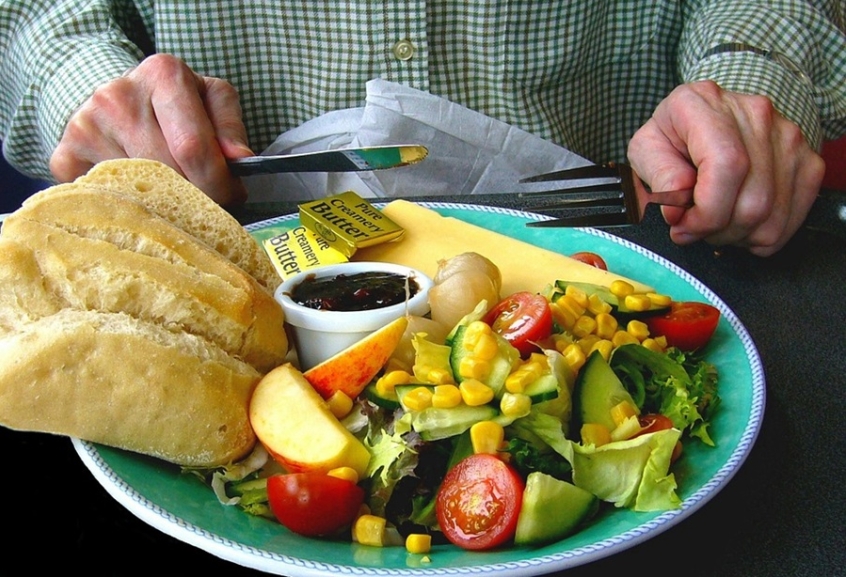
People are making more of an effort to eat healthy nowadays, and many have trained themselves to feast on a salad and water instead of indulging in a big and juicy hamburger with coke.
However, there are a lot of "healthy" foods that aren't actually that healthy. Australian nutritionist Susie Burrell wrote on her blog that people should be careful about their options every time they go to the supermarket because they might be fooled into buying "sneaky foods that are commonly assumed as good choices."
One of these offenders is tinned tuna. Burrell explained that tuna is generally a good choice for meals because it is high in protein and low in fat. But the issue with tinned tuna is that it is a source of mercury - an element that people cannot secrete from the body.
"Whilst tinned tuna has less mercury than fresh tuna, as it is generally farmed before the tuna get too large, the recommendation is for Australians to consume tinned tuna at most 2-3 times each week. For this reason, if tuna is on your daily menu, it may be worth swapping to salmon or sardines every so often," she advised.
Another offender is soy sauce, which is often served with a healthy Japanese lunch. Burrell said that a serving or two of soy sauce along with sushi rolls means high intake of salt, which is associated with fluid retention, thirst and increased blood pressure.
"For this reason go easy on the added soy sauce when you are enjoying Asian cuisine and where possible look for salt reduced varieties of soy which contain almost ½ the amount of sodium as regular soy sauce," she said.
Lastly, rice crackers are a popular choice for those who are going on a diet, but Burrell said that 10 rice crackers are already equivalent to two small slices of bread. It also comes with a hefty dose of MSG, and any flavored crackers make the equation worse.
"White rice is also a dense source of high glycaemic index carbohydrate which means that blood glucose levels rapidly increase, along with the hormone insulin, the hormone that also promotes fat storage in the body. Rice snacks are also low in protein and other key nutrients which mean that they simply offer 'empty calories' along with a rapid rise in blood glucose levels rather than long lasting energy," she explained.
Meanwhile, Garth Davis, MD, a bariatric surgeon at The Davis Clinic in Houston, Texas, also warned people off trail mixes. Gym buffs often carry protein bars and chew on these when they get hungry, but Davis said marketing geniuses have fooled people into thinking they are healthy when they are not. "Protein bars are all just processed chemicals," he told iVillage.com.
If people really want to snack on these, Davis suggested that they get ones with the least amount of ingredients and those with less than 200 calories and 20 grams of sugar per serving.