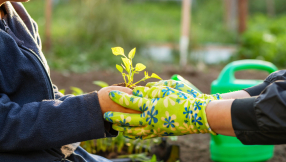
Back in February, my family and I decided to try a Plastic-Less Lent and put together a Facebook group to see if anyone else wanted to join us and share ideas and challenges. Much to my amazement, the group grew to well over 2,000 within a matter of days, from around 55 countries. Clearly this was an issue people were interested in.
People were engaged and excited. Such was the demand, the group has now become 'Plastic-Less living' and is continuing past Easter.
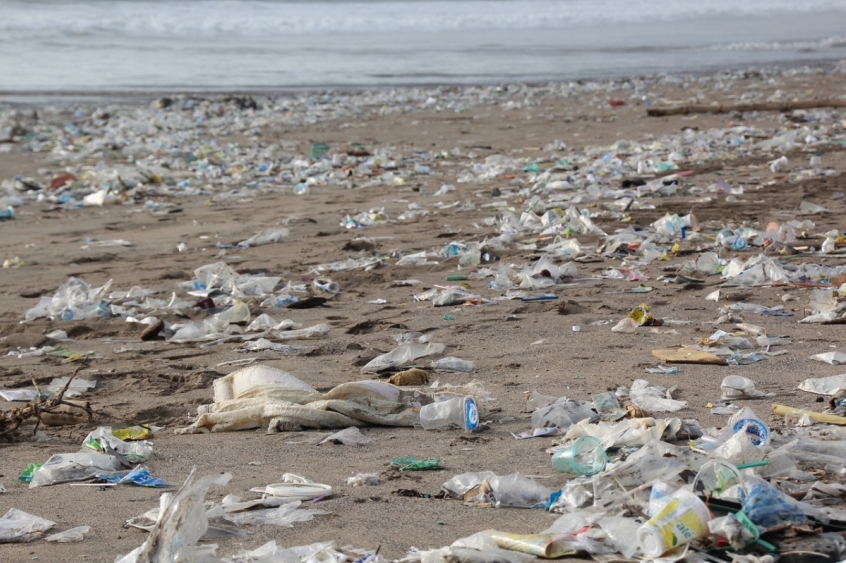
A survey by ComRes for the Global Challenges Foundation (GCF) found that 84 per cent know they should try to prevent future 'climate catastrophes', even if doing so has an impact on living standards. And yet, according to WRAP, the UK still generates about five million tonnes of plastic waste a year. So, public will, it seems, is not enough.
The government has already started to capitalise on this wave of discontent with our throwaway culture, and that is very welcome. The plastic bottle deposit scheme, where shoppers can claim money back if they recycle the containers, was announced a few weeks ago with little controversy.
When the five pence tax for plastic bags was introduced, usage plummeted by 80 per cent almost overnight – so do we need laws to help us change our lifestyle? It makes it easier to remember your reusable bags when you know you'll be charged if you don't.
Ministers are acutely aware of being a minority government and so it seems that for more of this kind of law, there has to be a swell of public support and demand.
At Tearfund we've been campaigning for more of the UK's international aid budget to be spent on waste management in developing countries. Two billion people in the world have no rubbish collection and as well as causing environmental damage, mismanaged plastic waste is increasing the likelihood of diarrhoeal and infectious diseases. On top of that the toxic fumes from burning waste leads to hundreds of thousands of premature deaths a year.
Earlier this month thousands of Tearfund supporters emailed the Department for International Development asking it to take action on plastics and poverty. Last week the prime minister announced she would agree to the request and pledged to spend millions of pounds on this issue. A real sign that government listens to our concerns and a great step forward. But there is more to do.
It's not just here in the UK that people power is convincing governments to make changes. In Recife, Brazil, Tearfund is working with communities living on the River Tejipio who are often flooded because of plastic waste. People have started campaigning, marching and demanding action from government. As a result the local authority has started some waste collection services.
Business also seems to be responding to the growing public dissatisfaction with the damage we are doing to the planet. The Iceland chain, for example, has pledged to get rid of plastic on all of its own brand products and a growing number of independent coffee shops are now refusing to use single-use cups.
So what can we do? Let's keep putting the pressure on government and business to bring about changes that will benefit us all – people and blue planet alike. Our generation has an opportunity like no other. We are more connected and better informed than ever before. We can choose to work together to break down injustice, build up a more equal society, and a more sustainable planet.
Tearfund is part of Renew Our World, a movement of Christians from all over the world who are coming together to live simply, call for urgent action on climate change, seek justice, challenge inequality, and praying together for a world, and an economy, that brings restoration and renewal. Why not join us?
Dr Ruth Valerio is global advocacy and influencing director at Tearfund. Follow her on Twitter @RuthValerio