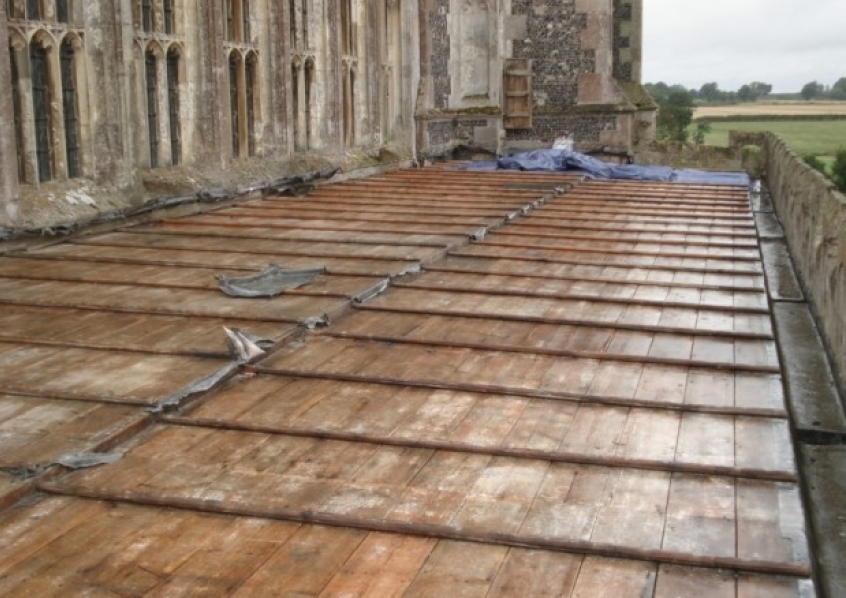
Churches are being urged to increase security measures at their buildings after a spate of lead thefts over the last two years caused more than £2m in damage.
Remote countryside churches in particular have been targeted by organised gangs looking for valuable lead in the roofing.
On Wednesday, four men were sentenced to a total of over 19 years in prison in connection to lead thefts at over 20 churches across several counties, including Lincolnshire, Leicestershire, Wiltshire and Yorkshire.
The churches were targeted between 2018 and 2020, and included Grade I-listed buildings.
Jo Whyman, risk management director at church insurer Ecclesiastical, said that the difficult financial climate may trigger a rise in lead thefts.
"We're pleased that this prosecution has been successful and hope it serves as a deterrent to would be criminals," he said.
"This is a timely reminder that the theft of metal is an ongoing issue and the knock on effects can be huge.
"There is a risk that the continuing economic downturn in the UK could see an increase in theft of metal from buildings such as churches, which is why it is vital that they take steps to protect their premises from unscrupulous offenders."
The cost of repairing damage caused by lead theft can run into the thousands. In addition to the structural damage, the experience can be traumatic for the congregation too.
Whyman continued: "Our sympathies go out to those churches who have been victims of metal theft. It isn't just the physical damage that takes place when these crimes are committed. Churches aren't just about bricks and mortar, it's about the people and the communities they represent.
"In many cases lead is stripped without churches knowing which leads to further issues with water ingress into the exposed roof, causing even more damage than the theft itself and preventing churchgoers from attending which can be devastating.
"By taking steps now, churches can deter would be thieves and help to protect themselves. Our teams are on hand to help, with more resources available through our website."
Ecclesiastical is urging churches to take action to stop themselves becoming the next victim by installing devices like security lights, CCTV and roof alarms, or marking the metal in their buildings with Smartwater, a forensic security marking system.
Ecclesiastical and a number of other organisations, including Historic England, are partners of OPAL, the National Intelligence Unit for Serious Organised Acquisitive Crime that investigates lead thefts.
Mark Harrison, head of heritage crime strategy at Historic England, said: "At Historic England we are working with partners to assess the scale of the metal theft problem across the country and develop a coordinated national approach to protect those churches at the highest risk of crime.
"This includes training local police teams and law enforcement agencies to identify stolen heritage metal when on duty, encouraging scrap metal dealers, smelters and salvage yards to contact the authorities when offered suspected stolen materials."