(RNS) — The U.S. Supreme Court declined on Tuesday to hear a case involving a debate over whether a fetus is entitled to constitutional rights, rejecting an appeal spearheaded by a Catholic anti-abortion group.
The case revolved around a challenge to a 2019 Rhode Island statute that codified into state law provisions regarding abortion established by Roe v. Wade, the landmark ruling overturned by the current court in Dobbs v. Jackson Women's Health Organization in June.
Two pregnant women, along with a group known as both Catholics for Life and Servants of Christ for Life, challenged the state law, arguing they were doing so on behalf of unborn fetuses. The state, they claimed, was violating the fetuses' "personhood." The Rhode Island Supreme Court ruled in May that the fetuses lacked legal standing, and by refusing to take up the case, the U.S. Supreme Court allows the lower court ruling to remain in place.
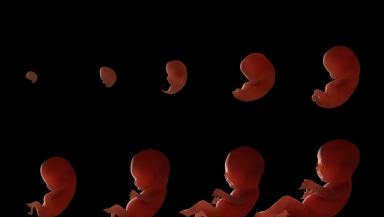
The justices' move on Tuesday represents a setback for supporters of "fetal personhood," a notion advanced by some anti-abortion activists that holds that an unborn fetus is entitled to the constitutional rights of any American citizen. Enshrining the concept into law, legal experts say, could have consequences for those who plan to become pregnant through in vitro fertilization and could result in the criminalization of abortion as homicide.
Advocates for fetal personhood have pushed their cause in several states. In Georgia, fetal personhood legislation, approved in the wake of Dobbs, goes so far, according to the state's Department of Revenue, as to allow residents to claim unborn children as a dependent. In Texas, a pregnant woman pulled over for driving alone in a high-occupancy-vehicle lane on the highway told a police officer that her unborn fetus counted as a second person.
She reiterated the argument when contesting the ticket in court and won over a judge, who ultimately dismissed the case — although she was ticketed again for the same infraction in July.
In the Dobbs case, Justice Samuel Alito, writing for the majority, argued that those who support abortion rights "regard a fetus as lacking even the most basic right — to live." But elsewhere in the opinion, Alito stated, "Our opinion is not based on any view about if and when prenatal life is entitled to any of the rights enjoyed after birth."
© Religion News Service