There's a familiar narrative in some Christian circles that the secularists are out to get us. It's not entirely unfounded of course; prominent atheists and secular humanists have increasingly been calling for religious privileges to be repealed and for the role of faith in society to diminish.
These are minority voices, amplified by an interest media; they rarely represent the views of the average person in the street. Yet they do succeed in poking the evangelical bear, and provoke a reaction from groups that have become self-appointed defenders of religious, or rather Christian freedom. Ironically, all that does is increase the amplification of the original voice.
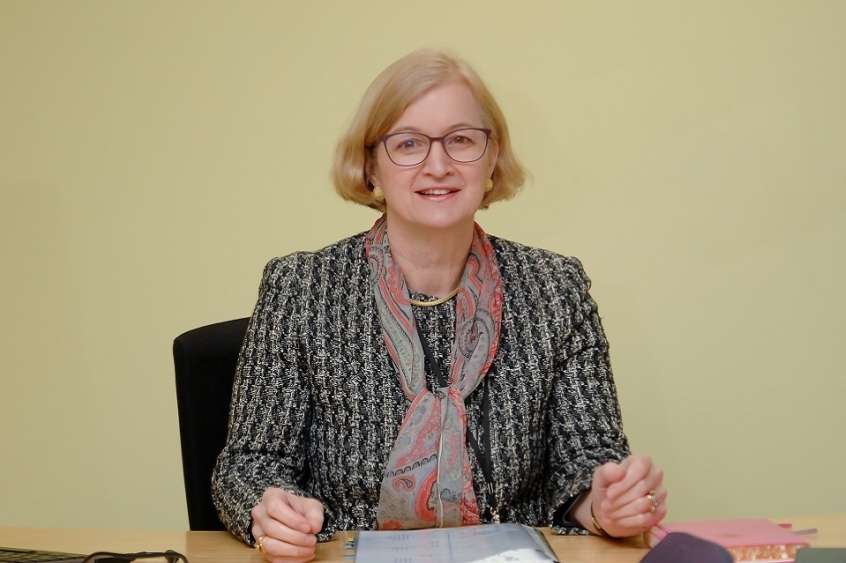
The latest cause for concern is Ofsted chief Amanda Spielman's assertion that the school inspection body needs powers to assess out-of-school education settings. Such an idea was first suggested and then dropped back in 2016 under David Cameron's government, and at the time various Christian groups expressed concern about (and even held panicked para-church gatherings to discuss) the proposal, fearing that it would have worrying implications for Sunday schools and other Christian youth and children's groups. Now, after Spielman revisited the idea when addressing the Church of England's Education Conference, prominent lobbyists (our very own media-amplified minority) have been quick to sound the alarm.
In truth though, the suggestion that we could end up with Ofsted inspectors standing in the middle of our Friday night game of youth dodgeball in the church hall is a bit unfounded. The original proposals, which Spielman appears to be revisiting, applied to out-of-school contexts which spend more than six hours per week with children and teenagers. I can count on the fingers of one hand the number of youth groups of which I'm aware that would actually meet that quota, although of course there will be some. Churches tend to be delighted if they see kids for two or three hours in a week; in Christian terms at least six+ tends to be the domain of more fundamentalist churches.
Of course, the proposals were developed as part of a strategy to combat religious radicalisation and their main focus was never really the Christian faith. Still, many of us were spooked by them, which begs the question: what exactly do we have to hide?
I've been involved in running Christian youth work in various contexts for nearly two decades now. I can't think of a session that I've run in that time – from Bible studies about God's view on sex to Big Top worship meetings where teenagers have been apparently 'slain in the Spirit' – that I wouldn't be happy for an outsider to inspect. This is our faith, we believe it, and we believe that it should be respected even by those who don't share it. If we're saying or practising things that are potentially harmful to young people, then a secular inspector would be going the Good Lord's work in spotting them.
In reality, I'd love the opportunity for some impartial observers to witness the incredible contribution to young people's lives and general well-being the average Christian youth work makes.
Now, you might understandably ask: on what basis are we deciding what could be 'potentially harmful' to young people? After all, as the Christian Institute's Colin Hart put it, '"muscular liberalism"' (a phrase coined by Spielman in her speech) must not mean aggressive secularism'. Would biblical discipleship be seen as potentially harmful? Would encouraging young people to practise sexual delay be viewed as such? Or inviting them to receive prayer for healing, or to embrace the gift of tongues?
I don't think so, but of course it's possible. At that point, perhaps we really would be at the point of seeing Christian persecution here in the UK. Right now, what we're really talking about is casting light on a few contexts where children and young people are regularly indoctrinated for extended periods.
And are we really saying that such scrutiny would be a bad thing? Of course it wouldn't. The average youth and children's worker really has nothing to fear from these proposals. Ofsted inspectors will almost certainly never darken the doors of the average Sunday night youth Bible study group. And if for some reason they do, then let's do what we do for every visitor to such a group: put the kettle on, hand them a bit of toast and chocolate spread, and welcome them with open arms.
Martin Saunders is a contributing editor for Christian Today and the deputy CEO of Youthscape. Follow him on Twitter@martinsaunders.