It's St David's Day, when the patron saint of Wales is honoured and the patriotic flame burns a little brighter. But who was this famous saint, and why is he still remembered?
David was born around the year 500, the son of St Non. She had been raped by one of the princes of Ceredigion, who is given various names. David was the result, and according to the Life of St David writen by Rhigyfarch around 1095, he was destined to be a great preacher. While he was still in his mother's womb a local preacher found himself unable to speak in his presence and prophesied great things for him. A nearby ruler feared his power and plotted to kill him, but a great storm on the day of David's birth prevented him from doing so.
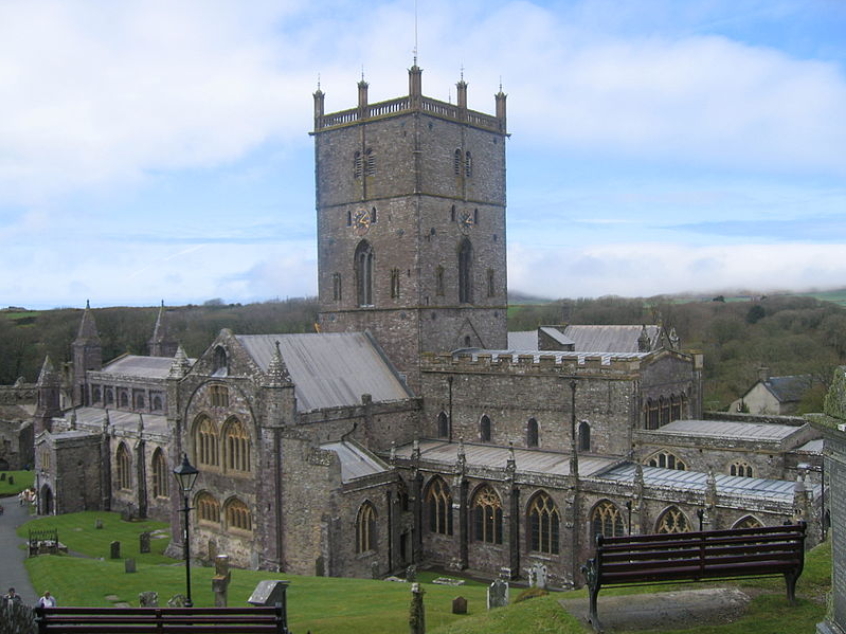
Reliable information about those times – which used to be known as the Dark Ages, though the term isn't really used nowadays – is scarce. However, it's known that David founded several monasteries including the one in the town that bears his name today, and that he and his followers lived a simple life, eating no meat and refraining from beer. The monks pulled their own ploughs without using draught animals and had everything in common; even saying "my book" was a breach of the monastic rule. David's symbol is the leek.
He became a bishop in the Church and made several pilgrimages, including one to Jerusalem. Tradition has it that he brought back with him a stone that is now part of an altar in the Cathedral that bears his name.
David was a noted opponent of Pelagius, who opposed the idea of predestination and was believed to teach that people could achieve salvation by their own efforts.
Like many saints of the time, David was a miracle-worker. One story about him is that he was preaching at the Synod of Llanddewi Brefi when the crowd complained they couldn't hear him. The ground on which he stood is said to have risen up to form a small hill so everyone had a good view, and a white dove settled on his shoulder as a sign of God's blessing. One historian, John Davies, wrote that one can "scarcely conceive of any miracle more superfluous" in that part of Wales than the creation of a new hill.
David is believed to have died on this day in around 589. His last sermon closed with the words: "Be joyful, and keep your faith and your creed, and do the little things that you have seen me do and heard about. I will walk the path that our fathers have trod before us."