The bishops of Sudan and South Sudan have criticised their exclusion from peace talks in Addis Ababa following the ceasefire of 23 January.
Violence began on 15 December last year in Juba as a result of an attempted coup by soldiers loyal to South Sudan President Salva Kiir's former deputy Riek Machar. The fighting then spread throughout the country, fracturing it along ethnic lines.
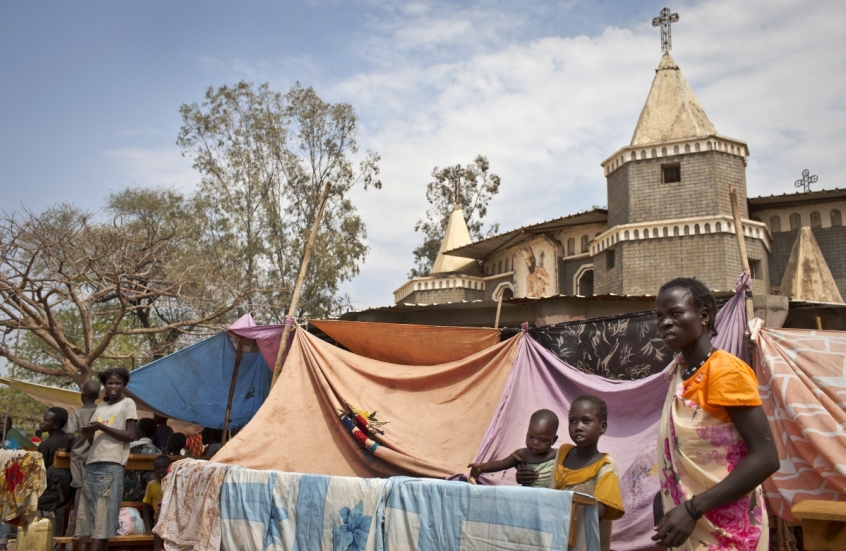
The crisis was the culmination of years of instability - significant political unrest has plagued South Sudan ever since its secession from the north in 2011 following two bloody civil wars. The latest wave of violence has resulted in an estimated 10,000 deaths and many more casualties. The UN believes 740,000 people have been displaced.
A ceasefire was eventually negotiated and came into effect on Friday, though there have been unconfirmed reports of sporadic fighting since then.
Peace talks aimed at establishing a final peace agreement are currently taking place in the Ethiopian capital of Addis Ababa, however the Church and other civil society groups have been excluded from taking part.
Bishops criticise this decision in a Pastoral Exhortation published at the end of their Plenary Assembly held in Juba from 21 to 31 January, in which they note their past active role in mediation and question the legitimacy of the latest round of peace talks.
Church leaders claim that their exclusion threatens to undermine the root of any future agreement reached between the two parties, given that the violence initially stemmed from political tensions and a leadership crisis within the government.
"Why is it that only those who took up arms are discussing the future of our country? What is the legitimacy of any agreement in Addis Ababa built on military groups determining our future?" they ask.
"A handful of political leaders instigated a crisis in which their followers have devastated the country; how can they alone be entrusted with negotiating the future of the nation without input from citizens?"
The exhortation also addresses military issues, calling for a non-political army that primarily respects and protects civilians. In addition, the importance of education is underlined; noting that it is vital to help young people understand the "structures and dynamics" and "moral and ethical values" of a safe, functioning society.
"Many of our leaders are churchgoers, but their behaviour does not indicate a good moral life," the bishops write.
"We need to form consciences and professional ethics."
The bishops conclude the document by expressing a renewed commitment to contributing to peace and reconciliation in South Sudan and Sudan, and ask for increased prayer, calling "on the nation and all people of good will to continue to accompany the peace and reconciliation process with prayer and fasting".
"Let our nations be built not on foundations of sand but on strong foundations of truth, justice, reconciliation, diversity and peace, on the foundations of the Gospel values enshrined in Catholic social teaching," they said.