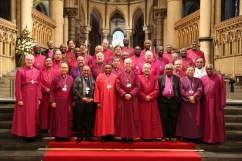
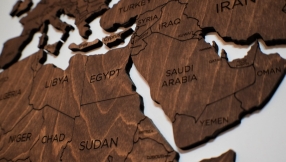
Anglican bishops across southern Africa have announced same-sex couples should "share in full membership" of the Church.
A letter from Archbishop Thabo Makgoba of Cape Town was sent to congregations on Monday outlining the Church's position. It also said a document containing guidelines on church members with gay and lesbian partners will be sent to the Church's Provincial Synod which will meet later this year, according to the Anglican Communion News Service.
Makgoba cited division among the southern African bishops over whether to marry same-sex couples or allow clergy to enter gay unions. As result he said they would continue to hold to the consensus of the Anglican Communion as a whole which prevents both of these options.
"We are of one mind that gay, lesbian and transgendered members of our church share in full membership as baptised members of the Body of Christ..." he wrote.
The implications of the document's guidelines are that congregations should no longer be able to refuse baptism for same-sex couples' children.
Makgoba added that the document's adoption by Provincial Synod would be "an important first step in signalling to the LGBT community that we in the Anglican Church of Southern Africa, through our top deliberative and legislative body, see them as welcome members of our body as sisters and brothers in Christ".
The divisions over marrying same-sex couples concerned theology as well as practical realities in dioceses, he said.
"For example, most of our dioceses across Southern Africa are predominantly rural, and for many the urgent priorities of food security, shelter, health care and education crowd out debate on the issue of human sexuality. In some rural dioceses, responding to challenges to the Church's restrictions on polygamous marriages is a much higher pastoral priority."
Archbishop Makgoba said the differences were not a "church-dividing issue" and insisted he wanted to avoid the splits seen in The Episcopal Church in the US over same-sex couples.
"We overcame deep differences over the imposition of sanctions against apartheid and over the ordination of women, and we can do the same over human sexuality," he wrote.