Any illusion that Britain remains a Christian nation should have been dispelled by two major events within 24 hours affecting both church and country.
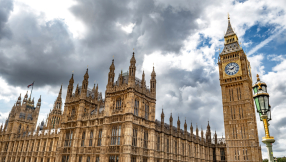
There was the vote in the House of Commons to re-define marriage, and the day before that was the confirmation of Justin Welby as Archbishop of Canterbury.
What was noteworthy about the media coverage of Justin Welby was not only how low-key it was – with some news websites scarcely giving it any prominence at all – but also the fact that the focus of the reporting was almost entirely on his views about gay marriage, to the exclusion of much else. And that's pretty reflective of how many newspapers and broadcast organisations now treat the Christian faith more generally: they either ignore it altogether, or cover it only in the context of controversy.
When it comes to the vote on gay marriage by MPs, it has been clear for some time that this is the way society both in the UK and in other countries is heading. It is possible the bill will run into difficulties in the House of Lords – but should it be defeated there, it is highly likely a future government will bring it back, quite possibly without any of the proposed safeguards for religious groups which are currently included (however illusory they may be).
As Christians in the UK, we are increasingly back where our forebears have been in many different contexts – from slavery in Egypt, to exile in Babylon – that latter word of course becoming a shorthand way of describing a worldview antithetical to Christ.
Likewise, when the Apostle Paul wrote to believers in first century Corinth, he was addressing people living in a place described by Brian Harbour in his book Contextualising the Gospel as "pluralistic, multicultural, urban, profane, political, and immoral". So how did they handle that sort of situation?
When it came to specifically ethical issues, the church at Corinth had all sorts of problems, of course, but it was both inclusive and transformative. It was radically inclusive in the sense that it apparently included those who had previously been "sexually immoral, idolaters, adulterers, male prostitutes, homosexual offenders, thieves, greedy, drunkards, slanderers and swindlers" (1 Corinthians 6v9-10) – and yet at the same time it was dramatically transformative in that those words described people's lifestyles before they met Jesus Christ. "That is what some of you were," Paul says. "But you were washed, you were sanctified, you were justified..."
When it came to the broader matter of engaging with the world around it, Harbour suggests that the church in Corinth sought to avoid two dangers: the first was that of isolating itself from the surrounding culture, cutting itself off from the people it was meant to be loving and serving. The second was identifying with society to such an extent in a desire to engage with it that actually the church began to absorb the values of those outside and so lost all its distinctiveness. Instead, he argues, Paul called the Corinthians to be incarnational: to be – as Jesus was – in the world, but not of the world.
This is surely what Apostle Peter has in mind as he writes: "I urge you, as aliens and strangers in the world, to abstain from sinful desires, which war against your soul. Live such good lives among the pagans that, though they accuse you of doing wrong, they may see your good deeds and glorify God on the day he visits us." As residents of Babylon, but citizens of heaven, this too is our calling in Britain today.