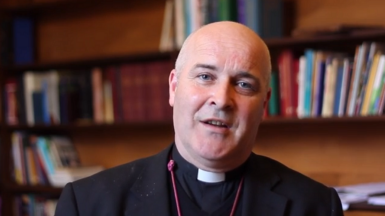
Should the Archbishop of York Stephen Cottrell resign after facing calls to do so over his handling of a sexual abuse case? The question is genuinely debatable.
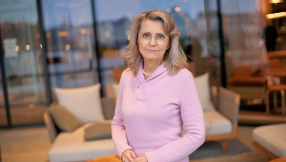
The Bishop of Newcastle, Helen-Ann Hartley, has called for his resignation after a BBC investigation revealed that when he was Bishop of Chelmsford, he allowed a vicar barred by the Church from being alone with children to remain in post.
Dr Hartley told the BBC: "It completely undermines his credibility that this case was not acted on. How can you have the moral and ethical authority to lead an institution with that?"
Archbishop Cottrell is due to take over interim leadership of the Church of England in January following the resignation of the Archbishop of Canterbury, Justin Welby, after he was criticised in the Makin Review into the savage serial abuses by John Smyth.
Responding to news coverage following the BBC File on 4 Investigates radio programme into his handling of the David Tudor case, Archbishop Cottrell issued a personal statement on December 16 defending his safeguarding record.
"The situation I faced when I became Bishop of Chelmsford, was horrible and intolerable - most of all for the survivors and victims who had bravely come forward and shared their stories from the 1980s," said Cottrell.
"This morning's news coverage incorrectly implies that no action was taken until 2024. That is not the case. In my capacity as Bishop of Chelmsford, I suspended David Tudor from office at the first opportunity, when a new victim came forward to the police in 2019. Up until 2019, there were no legal grounds to take alternative action."
He went on to say that "it was not possible to remove David Tudor from office until such time as fresh complaints were made, which happened when a victim bravely spoke to the police".
"Once this happened in 2019, I acted immediately. I suspended David Tudor from all ministry pending the investigation and subsequent tribunal hearing in which he was removed from office and prohibited from ministry for life."
Writing in The Telegraph on December 17, Charles Moore argued that it would be a mistake for Archbishop Cottrell to resign. He believes that Christianity will not "benefit if archbishops can be kicked out like football managers".
He wrote: "Neither archbishop is accused of iniquity, but of mishandling. The Church has indeed made dreadful mistakes about child abuse, but it must be acknowledged that the problems involved are extremely complicated, concerning the legal rights of both victim and accused.
"Accusations cannot simply be accepted; they must in justice be proved...Responsibility does not necessarily lie at the door of the most famous person involved."
Who is right - Charles Moore or Helen-Ann Hartley?
I would suggest that the balance of the argument tips in favour of Archbishop Cottrell voluntarily leaving his post rather than being kicked out like a football manager.
According to the Ordering of Deacons, Priests and Bishops in the Church of England's Book of Common Prayer, reflecting as Anglicans believe the teaching of the New Testament, an ordained person at whatever level is called faithfully to proclaim the good news of Jesus Christ and the eternal salvation that is to be found in the Lord alone.
But does not faithfulness to the gospel involve the minister being sensitive to the cultural context in which the unchanging biblical message is to be proclaimed?
Being sensitive to the cultural context does not mean being ruled by it. For example, faithfulness to the biblical gospel demands that the Church resists the pressure to ditch its traditional teaching on marriage and sexual morality.
But there is now such a high degree of public scandal at the Church of England's handling of safeguarding that the question arises: can a senior minister in Archbishop Cottrell's position and situation faithfully communicate the gospel in the present context?
It is surely arguable that, even though an interim Archbishop of Canterbury was not guilty of misconduct, the background noise around the safeguarding scandal they are embroiled in means they would struggle to gain a hearing from the public as a minister of the gospel.
If a senior minister were to resign voluntarily under the circumstances facing Archbishop Cottrell, that would not necessarily be the end of their ministry. They could return to parish ministry - former Archbishop of York, David Hope, did just that in 2005. He told the BBC when he took up his post as a parish minister in West Yorkshire: "I'm really looking forward to engaging with people and serving the community. There'll also be a lot to learn as I haven't been a parish priest for 20 years and the job has changed so much."
The positive question now arises around Archbishop Cottrell: could not the voluntary resignation of a minister from a senior position in the Church and his willingness to serve in a junior capacity actually give them a renewed authority to proclaim the gospel?
Julian Mann is a former Church of England vicar, now an evangelical journalist based in Lancashire.