Sex only belongs in heterosexual marriage, a new statement from the Church of England's House of Bishops has declared.
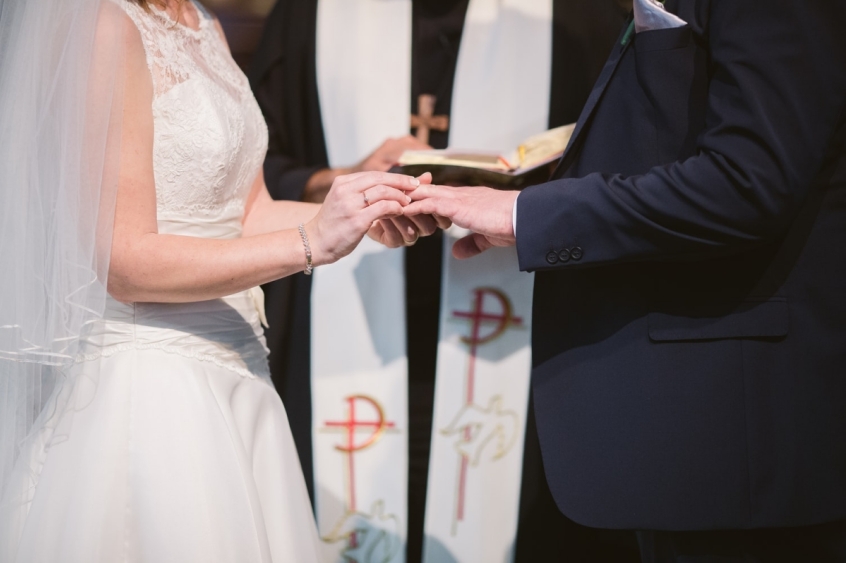
In a document responding to the introduction of mixed-sex civil partnerships, the Bishops say: "For Christians, marriage – that is the lifelong union between a man and a woman, contracted with the making of vows – remains the proper context for sexual activity.
But they also add: "In its approach to civil partnerships the Church seeks to uphold that standard, to affirm the value of committed, sexually abstinent friendships and to minister sensitively and pastorally to those Christians who conscientiously decide to order their lives differently."
The statement affirms: "Sexual relationships outside heterosexual marriage are regarded as falling short of God's purposes for human beings. The introduction of same sex marriage... has not changed the church's teaching on marriage or same sex relationships."
The new declaration acknowledges that a working group called 'Living in Love and Faith' is looking at contemporary issues of sex and morality with a view to informing the church's discussions, but reiterates: "In the context... of the introduction of opposite-sex as well as same-sex civil partnerships, the teaching of the church on marriage remains unchanged."
The document is entitled 'Civil Partnerships – for same sex and opposite sex and opposite sex couples. A pastoral statement from the House of Bishops of the Church of England'.
In relation to Civil Partnerships, the Bishops say: "There is likely to be a range of circumstances in which people of the same sex or opposite sex choose to register a partnership, including some where there is no intention for the relationship to be expressed through sexual activity."
They caution: "Because of the ambiguity about the place of sexual activity within civil partnerships of both sorts, and the church's teaching that marriage between a man and a woman is the proper context for sexual intercourse, we do not believe that it is possible for the church unconditionally to accept civil partnerships as unequivocally reflecting the teaching of the church."
And they add: "It would not be right to produce an authorised public liturgy in connection with the registering of civil partnerships... Clergy of the Church of England should not provide services of blessing for those who register a civil partnership."
But they also say: "It will be important... to bear in mind that registered partnerships do allow for a range of different situations - including those where the relationship is simply one of friendship. Hence, clergy need to have regard to the teaching of the church on sexual morality, celibacy, and the positive value of committed friendships in the Christian tradition. Where clergy are approached by people asking for prayer in relation to entering into a civil partnership they should respond pastorally and sensitively in the light of the circumstances of each case."
The Bishops highlight what they see as the distinction between marriage and civil partnerships, and why this is important: "Marriages are solemnised with vows and civil partnerships are not."
The statement is likely to delight and hearten orthodox Anglo-Catholics and Evangelicals in the Church of England, as well as the mostly-traditionalist wider Anglican Communion. It may well dismay liberals, although the document does permit clergy and others the freedom to argue for a change in the church's teaching. However, it then adds that they are "not entitled to claim the liberty to set it aside".
The document was completed in December but published yesterday.
David Baker is a former daily newspaper journalist now working as an Anglican minister in Sussex, England. Find him on Twitter @Baker_David_A