Senator asks: Why did FBI free suspect in murder of 4 Americans in Benghazi?

A Republican senator has accused the US government of mishandling the case of a known arms trafficker of the jihadist group Islamic State who was also linked to the murder of four Americans in Benghazi, Libya, three years ago.

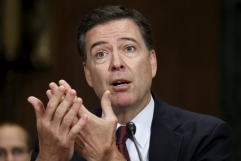
Senator Chuck Grassley of Iowa recently wrote to Federal Bureau of Investigation (FBI) Director James Comey and US Attorney General Loretta Lynch questioning why Ali Awni al-Harzi "somehow slipped out of our government's reach."

Al-Harzi was a Tunisian recruiter and an ISIS member killed last month during a US airstrike in Iraq.

Grassley pointed out that the FBI was able to interrogate Al-Harzi in Tunisia before he was released in January 2013, or months after the Sept. 11, 2012 attack on the US diplomatic mission in Benghazi.

"Although Al-Harzi was on our radar in 2012 for his terrorist activities, he somehow slipped out of our government's reach, only to continue his terrorist career for years," Grassley wrote.

Grassley noted in his letter that the US government, particularly former State Department Secretary Hillary Clinton, consented to Al-Harzi's release after Tunisia's government gave an assurance that his movements will be closely monitored.

Tunisian authorities, however, eventually lost track of Al-Harzi, allowing him to join the ISIS.

The Republican senator also questioned why the American government failed to extradited Al-Harzi to the United States despite the wealth of evidence against him, including his own social media posts about the Benghazi attack and classified documents kept by the FBI.

"This raises important questions about the Obama administration's policies and procedures related to the apprehension, interrogation, and detention of terrorists and the roles of the Justice Department and the FBI," the senator said in his letter.

Grassley also asked why the US government never considered a military operation to retrieve Al-Harzi.


related articles
We foiled Islamic State July 4 attacks, says FBI director

We foiled Islamic State July 4 attacks, says FBI director

FBI says it prevented ISIS from launching terrorist attacks in US to mark 4th of July

FBI says it prevented ISIS from launching terrorist attacks in US to mark 4th of July

ISIS may send female jihadists to Europe to attack Christian sites, warns Syrian expert

ISIS may send female jihadists to Europe to attack Christian sites, warns Syrian expert

Chattanooga shooting: Suspect made 2014 trip to Middle East

Chattanooga shooting: Suspect made 2014 trip to Middle East

News
The biblical backstory of Iran

Iran is back in the headlines. The word “Iran” does not appear in the Bible, but the names of preceding peoples and empires occupying that land today are written into the biblical narrative. This is the story …

Most pastors are using AI despite some concerns - study

For most pastors, AI is a "communication aid", said Barna.

12 Christians killed in Easter Sunday church attacks in Nigeria

Fulani terrorists killed 12 Christians in attacks on two worship services on Easter Sunday in Kaduna state, Nigeria, following the killing of 17 Christians in Benue state, sources said.

Can the Anglican Communion unite?

Joaquin Philpotts, who was on the Crown Nomination Commission for the new Archbishop of Canterbury, on whether there is any hope for unity in the fractured Anglican Communion.