Scientists at Cambridge University and Israel's Weizmann Institute of Science recently announced that babies developed from the DNA of two people of the same sex may soon be a reality.
Cambridge University professor of physiology and reproduction Azim Surani said that the technological breakthrough would also help infertile couples.
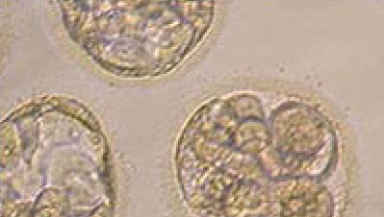
"We have succeeded in the first and most important step of this process, which is to show we can make these very early human stem cells in a dish," Surani, the lead researcher on the project, told The Sunday Times.
The scientists also discovered that the designer stem cells lack some of the genetic problems that other cells have.
"We have also discovered that one of the things that happens in these germ cells is that epigenetic mutations, the cell mistakes that occur with age, are wiped out," Surani said.
"That means the cell is regenerated and reset, so while the rest of the cells in the body have aged and contain genetic mistakes, these ones don't. We can't say no mutations are passed on, but mostly it doesn't happen."
The significance of the developments for same-sex couples was not lost upon the researchers.
"It has already caused interest from gay groups because of the possibility of making egg and sperm cells from parents of the same sex," Jacob Hanna of the Weizmann Institute of Science said.
Hanna said a baby could be created using the technique in as little as two years, although he had his reservations about the procedure.
"The social and ethical implications . . . need to be thought through," he admitted, "but I am very confident it will work and will be very relevant to anyone who has lost their fertility through disease."
National Institute for Medical Research stem cell biology and developmental genetics head Robin Lovell-Badge also saw the benefits of the research, although he believes its application is "probably a long way off."
"It would be a way for people who have had treatment for conditions such as childhood leukemia, which has left them infertile, to have children of their own," he conceded.