Scientists assailed for asking more time to experiment on embryos kept alive outside womb

 (Pixabay)

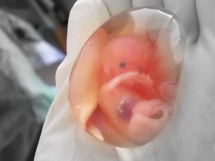
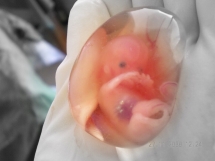
Human embryos are supposed to be nurtured naturally and safely inside the mother's womb during the early stages after implantation. Some scientists, however, are calling on authorities to extend the allowable period for experimentation on these embryos outside the womb.

Pro-life advocates opposed this call for more days to observe fertilised egg cells outside the womb, saying it destroys human life and creates clear ethical dilemmas.

Students for Life of America President Kristan Hawkins described the experimentation on human embryos outside the womb as "sick and twisted."

"There is no reason for experimentation on that human life and science itself should not be heralding the fact that a tiny human being can survive now for two weeks outside of the womb, all for the sole purpose of experimentation," she told LifeSiteNews.

Dr. David Prentice, a professor of molecular genetics and an Advisory Board member for the Midwest Stem Cell Therapy Center, meanwhile, explained that in the first place, there is no strong scientific basis for the current allowable 14-day period to conduct experiments on human embryos outside the womb.

"No human being should be used for lethal experimentation, no matter their age or stage of development. The 14-day rule is itself arbitrary, and does not assuage those who believe life begins at the moment of sperm-egg fusion," Prentice also told LifeSiteNews.

He added that making this already arbitrary experimentation period would destroy more human lives at the early stages of development.

"Moreover, allowing experiments on human embryos beyond 14 days post-fertilisation risks the lives of untold more human beings, because it further encourages creation and destruction for research purposes," Prentice said.

The medical practitioner further noted that embryonic stem cell research "has yielded no benefit thus far," and that extending the 14-day period may open the floodgates for ethical concerns on human life experimentation in the future.

"If this research does not stop at 14 days, where does it stop?" Prentice asked. "This is a risky step which could encourage further eugenic attitudes and actions."

He therefore called on the U.S. Congress "to have a full and open debate on the issue of human embryo research before the research community moves further without oversight."

related articles
US fertility clinics help parents choose baby\'s gender in controversial procedure
US fertility clinics help parents choose baby's gender in controversial procedure

US fertility clinics help parents choose baby's gender in controversial procedure

\'Designer babies\' now possible as U.K. allows scientists to genetically modify human embryos
'Designer babies' now possible as U.K. allows scientists to genetically modify human embryos

'Designer babies' now possible as U.K. allows scientists to genetically modify human embryos

More artificial babies soon? Chinese scientists successfully grow mouse sperm cells inside laboratory

More artificial babies soon? Chinese scientists successfully grow mouse sperm cells inside laboratory

Bill defining person as human being from moment of fertilisation pushed in Alabama

Bill defining person as human being from moment of fertilisation pushed in Alabama

Spark of life: Light flashes like fireworks when egg and sperm meet, scientists reveal

Spark of life: Light flashes like fireworks when egg and sperm meet, scientists reveal

News
Shine Your Light Christmas outreach campaign exceeded all expectations

300,000 Christians were involved in the various outreach events.

Most Americans don't believe faith in God is necessary to be moral

A record majority of Americans now say that it isn’t necessary to believe in God to be moral and have good values, but this view is primarily held by individuals who already don't believe in God, according to new data from the Pew Research Center.

Three and a half years of silence, fear, and faith: Mishal’s escape from forced detention

Abducted at the age of 18, Mishal spent three and a half years in forced confinement, enduring physical torture, religious coercion, threats, humiliation, and isolation before finally escaping with her baby daughter in her arms.

Pipe organs could be extinct by 2070

The pipe organs that remain are largely unused.