Sci-fi turns real: Scientists successfully upload plane piloting skills into human brain

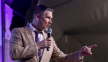
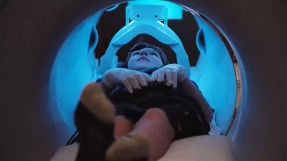
A scene from 'The Matrix,' where the character Neo (Keanu Reeves) gets connected to the matrix to get information directly into his brain. (Warner Bros.)

Many science-fiction television series and films—for instance, the Keanu Reeves-starrer "The Matrix" series—have depicted how certain knowledge and skills can be uploaded to the human brain, much like how information can be stored into computers. Thanks to science, this feat is slowly turning into reality.

Researchers from the HRL Laboratories in California have successfully fed data directly into the brain of human test subjects, enabling them to somewhat learn a very complex skill: flying a plane.

To be able to accomplish this incredible task, the researchers first analysed electrical signals in the brain of a pilot.

After doing this, they fed the data to individuals who do not have any idea how to fly a plane using electrode-embedded head caps which stimulated the correct regions of the brain.

In an interview with The Express, lead author Dr. Matthew Phillips said this is the first time ever that such a technique was used to upload data into the human brain.

"Our system is one of the first of its kind. It's a brain stimulation system. It sounds kind of sci-fi, but there's large scientific basis for the development of our system," Phillips explained.

He further explained that the research team particularly chose flying a plane for the experiment because it requires two sets of skills.

"The specific task we were looking at was piloting an aircraft, which requires a synergy of both cognitive and motor performance," the lead researcher said.

The system proved to be effective. When compared with a placebo group on a realistic flight simulation test, the participants who were fed with the pilot did 30 percent better.

Phillips said this better performance in the flight simulation test may be attributed to a brain change.

"When you learn something, your brain physically changes. Connections are made and strengthened in a process called neuro-plasticity," the lead researcher explained.

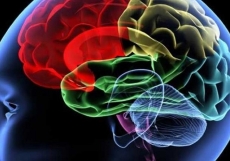
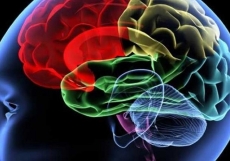
"It turns out that certain functions of the brain, like speech and memory, are located in very specific regions of the brain, about the size of your pinky," he added.


related articles
Hacking the human brain: Company unveils \'mind control\' headband to help people with disabilities
Hacking the human brain: Company unveils 'mind control' headband to help people with disabilities

Hacking the human brain: Company unveils 'mind control' headband to help people with disabilities

Brain-deforming Zika virus carried by mosquitoes reaches Hawaii, infects baby

Brain-deforming Zika virus carried by mosquitoes reaches Hawaii, infects baby

\'Neuroscience bombshell\': Human brain can store memories as extensively as the entire Internet
'Neuroscience bombshell': Human brain can store memories as extensively as the entire Internet

'Neuroscience bombshell': Human brain can store memories as extensively as the entire Internet

\'Eternal Sunshine of the Spotless Mind\' made real: Psychologists may soon be able to wipe out bad memories
'Eternal Sunshine of the Spotless Mind' made real: Psychologists may soon be able to wipe out bad memories

'Eternal Sunshine of the Spotless Mind' made real: Psychologists may soon be able to wipe out bad memories

\'Game-changer\': Pentagon developing brain implant to allow humans to communicate with computers
'Game-changer': Pentagon developing brain implant to allow humans to communicate with computers

'Game-changer': Pentagon developing brain implant to allow humans to communicate with computers

News
Chin human rights group takes Myanmar junta to court over killings, rapes

The Chin have been badly treated throughout much of Myanmar's post-independence history.

Sir Brian Souter says the nation is 'seeing a rebirth of Christ-centred Christianity'

Sir Brian Souter, the founder of Stagecoach and Megabus, has spoken candidly about the role of Christian faith in business and his view that Britain’s increasingly secular culture may be giving rise to a renewed and more authentic form of Christianity.

Report reveals religious and political shifts in UK

Faith identity and ideology "are assuming a more significant role in shaping political allegiance, civic participation, and the wider culture", a new report has found.

'Quiet revival' continues as Winchester sees Christmas surge

In some cases the numbers coming were double what was expected.