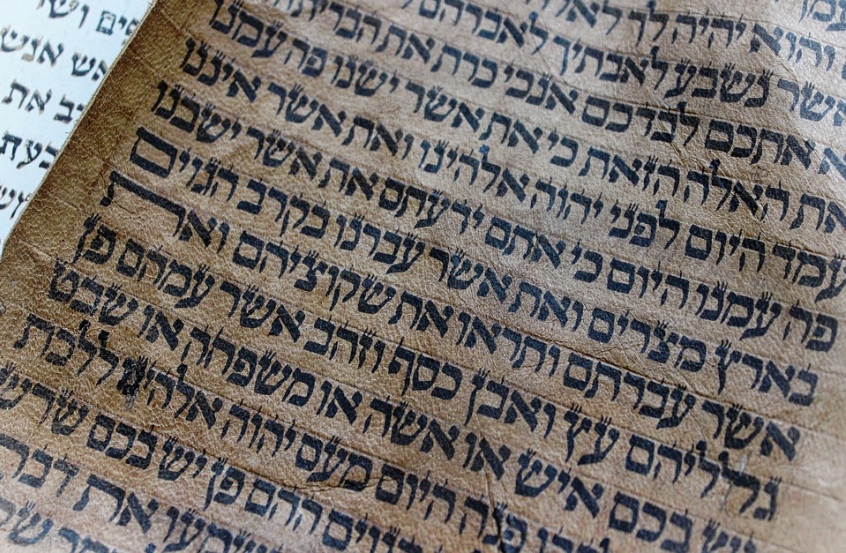
A 'sister' to the oldest manuscript of the Hebrew Old Testament has been uncovered, alongside its author – a discovery being celebrated as decisive for future Bible translations.
The Christian research centre Tyndale House, Cambridge announced the discovery by its young researcher Dr Kim Phillips yesterday. Phillips made a major step forward in biblical studies by identifying the author of a manuscript more than a 1000 years old as the famed scribe Samuel ben Jacob.
Samuel ben Jacob (meaning Samuel son of Jacob) authored the Leningrad Codex, the earliest complete copy of the entire Old Testament in Hebrew. This codex, known in short to scholars as L, is the source behind most modern Bible translations.
But a new, long-hidden text (dated to AD 975), located in St Petersburg and known as L17, has puzzled scholars. This codex contains Joshua, Judges, 1–2 Samuel and 1–2 Kings. Painstaking study by Dr Phillips has decoded the mystery of its authorship – and pointed to ben Jacob.
L, also known as Codex Firkowich B19a, was completed around AD 1008. The traditions within it are what scholars refer to as the Masoretic Text – a copy of the Hebrew Bible produced by a scholarly community called the Masoretes, written between the 7<sup>th and 10<sup>th centuries.
However, L contains subtle differences to other Hebrew codices from the same period, and scholars have debated whether these are mere errors – or represent a separate Masoretic tradition.
The discovery of L17 as the work of Samuel ben Jacob will now allow scholars to see whether the differences in L are deliberate or not – and the results will shape the future of scholarly Bibles and modern translations.
'For the first time (for scholars outside Israel and Russia) it is possible to contextualise the readings of the Leningrad Codex against the background of equivalent readings in other manuscripts known to have been written by Samuel B Jacob', Dr Phillips wrote in the Tyndale Bulletin.
Discovering the identity behind L17 only became possible this year after the National Library of Israel released online digital copies of the St Petersburg collection.
Phillips' complete article for Tyndale House can be read here.