Hundreds of thousands of Rohingya refugees, who fled across the border into Bangladesh to avoid violence in neighbouring Myanmar, are preparing for the new threat of a cyclone, according to Christian relief agency, Medair.
Cyclones have killed hundreds along Bangladesh's coast in the Bay of Bengal, where Medair has been working with Rohingya refugees since September 2017.
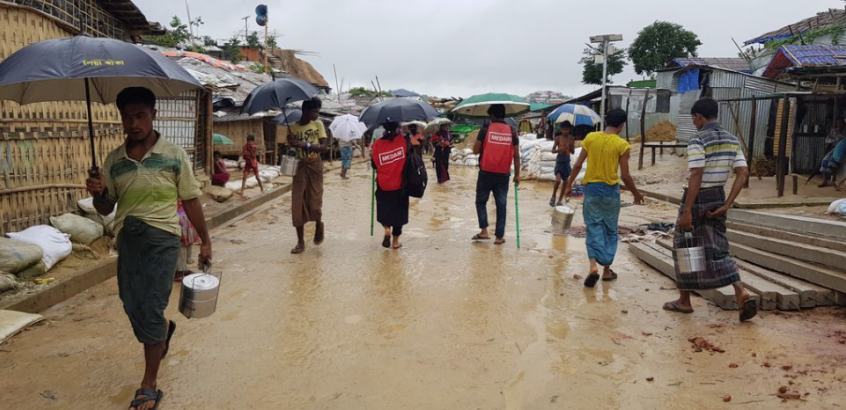
Since then, 800,000 Rohingya have been living in refugee camps in the Bangladesh coastal city of Cox's Bazar and are completely dependent on emergency aid for food and other life needs.
'There are refugees living in places that cannot withstand a cyclone,' according to Neil Casey, Director of Medair UK. 'Cyclones hit at the beginning or end of July. The refugees are living with a ticking time bomb.
'"It's hard to know what impact the cyclone will have on the lives of the refugees – it all depends on its intensity, and then the potential problems that follow, such as the outbreak of diseases like cholera.'
Cyclones have hit Cox's Bazar four times in the last five years and the area is known to be vulnerable to violent weather. Bangladesh regularly evacuates people from coastal areas; in 2017 up to a million people were evacuated to avoid the worst effects of Cyclone Mora. Low lying areas of Cox's Bazar are particularly vulnerable. Cyclone Sidr reportedly killed 600 people when it smashed into the Bangladesh coast in 2007.
The Rohingya are living in densely populated camps in tents made of bamboo and thin plastic. The shelters 'are very unlikely to survive a cyclone', according to the UN. Many live in inaccessible areas. Medair works with refugees in a part of the camp called Thangkhali, which is not accessible by vehicles. Refugees have to walk for two hours from the road to their tents.
Merel Verbeek, a Dutch national working for Medair, said women are particularly vulnerable. 'They are anxious, and malnourished – all the food goes to their children. They have a hard time. But they are happy that they are alive and have escaped the violence in Myanmar.'
Cyclones arrive in Bangladesh during the rainy season, which brings threats of its own.
'There have been many landslides in the camps, and the temporary shelters made of bamboo and thin plastic, which were handed out when the refugees first arrived, collapsed as a result. Also, any trees left in the camps get uprooted and fall over,' says Neil Casey. 'To make matters worse, any wood that is left is too wet to for the firewood the refugees need for cooking.'
Medair hands out shelter packages, including ropes to tie down the tents and give them some protection from the cyclone's winds. The organisation started its preparations ahead of the rainy season.
'During the monsoons we built two nutrition clinics, with a third opening soon. These are located in the dense, hard-to-reach parts of the camp, and offer additional food rations for about 15,000 pregnant and lactating women, and children under five,' said Casey.
Medair's team focuses on malnutrition and shelter. Since its arrival in Cox's Bazar in September 2017, it has installed drainage, paths, and retaining walls, distributed 4,505 shelter kits, and provided general health services.