Robert Grosseteste (1175-1253) is remembered today by the Church of England. As Bishop of Lincoln he was a fiery reformer. He stood up for the privileges of the Church against the state, like the martyred Thomas Becket, but he was also dedicated to the spiritual care of his flock. He stood against the practice of settling Church incomes on state officials, because he believed the money should go to supporting priests who would care for their parishes instead.
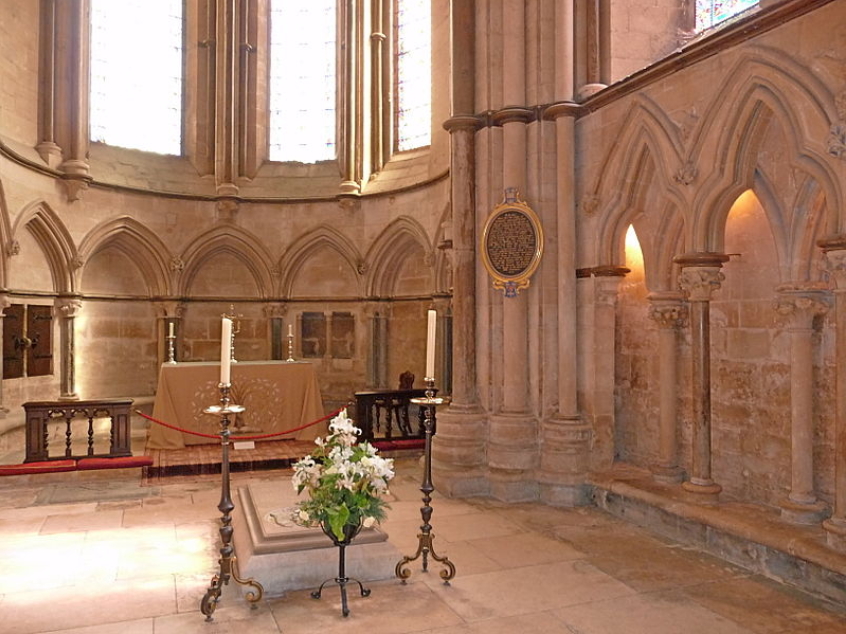
But it's as a scientist and philosopher that Grosseteste is remembered today. He lived at the time the works of the Greek philosopher Aristotle were becoming known in the Christian West. Aristotle's work had a huge effect on the Western Church as theologians were forced to grapple with new ideas, and Grosseteste learned from and wrote about Aristotle's scientific theories.
As a scientist, Grosseteste was far ahead of his time. He was particularly interested in optics, the study of light and how we perceive it, and his work on rainbows is still providing insights today. In an age when scholars tended to deduce from what they assumed to be true rather than actually testing it, he introduced the idea of the controlled experiment. He speculated on the development of both telescopes and microscopes long before they were invented, and even came up with a version of the Big Bang Theory of the origin of the universe centuries before anyone else. The universe began, he said, with an explosion of light and a crystallisation of matter to form stars and planets.
In today's world, where science and religion are often assumed to be in conflict, Robert Grosseteste reminds us that they aren't.