Nigeria is a deeply complex society divided along many tribal, linguistic, ethnic, geographical and class lines. A combination of political, economic and environmental factors contribute to increased tensions.
In the Middle Belt, poor government regulation of land, increased urbanisation, expansion of commercially cultivated areas, corporate mining activities and climate change have all increased the pressure on land. Ethnic and religious tensions are also a major contributing factor to the escalating conflict.
The three primary groups associated with violence are Boko Haram, a Salafi Jihadist movement whose name means 'Western education is forbidden', Islamic State in West Africa (ISWAP), an off-shoot of Boko Haram, and armed members of the Fulani ethnic group, known as Fulani militia - in speaking of the Fulani, we must be careful to emphasise the distinction between the Fulani in general, who are a diverse group of millions of people with hundreds of clans; and the sub-group of radicalised individuals of Fulani ethnicity who carry out attacks, mainly in the Middle Belt.
Tens of thousands of Nigerians have been killed by these groups. Almost three million are internally displaced.
UK Government response
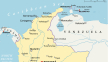
The British Government's response has predominantly focused on the Boko Haram insurgency in the north-east. Recent media interest has focused on the north-west, where bandit militants operate. Yet very little attention is paid to the Middle Belt, despite this being one of the worst-affected areas of Islamist violence.
At HART, we receive daily reports of killings, rape, abductions, enslavement, land-grabs and mass forced displacement in the Middle Belt.
Rev Canon Hassan John confirmed recently: "We still haven't heard of anything at all that has come from the British Government. No humanitarian assistance or support. It is left to local churches and charities like HART to provide aid."
Conflict in Nigeria has displaced thousands of children, and terrorist groups in northern and central states continue to target schools.
They kill students and teachers and carry out mass abductions for ransom. According to UN estimates, more than one million children in the country are deterred from attending school due to violence.
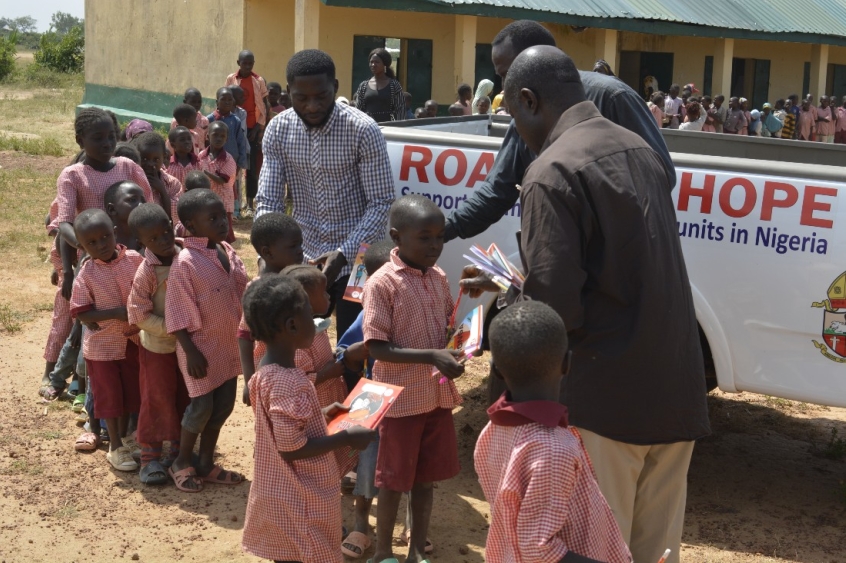
It is within this context that our small charity, Humanitarian Aid Relief Trust (HART), launched 'Roads to Hope', a locally-led project to provide safer education in Nigeria. The concept of the project is simple: when it is unsafe for children to travel to school, we bring the school to the children.
Our education van visits displaced students, fully equipped with books, pens, a whiteboard, an LED monitor and a solar-powered generator. We recruit local schoolteachers who live alongside the children in displacement camps, having fled violence in their own villages. Whilst the teachers are willing to work for free, the project provides them with a salary.
Putting a smile on people's faces
"It's been an exciting project," said Rev Canon Hassan John, who oversees Roads to Hope in Nigeria.
"We've been able to put a smile on people's faces. We've organised coaching among our community leaders and teachers. Parents are so grateful.
"Many children in the region have witnessed terrible conflict and violence. Children are forced to flee, scattered across camps and host villages. They are missing school because of insecurity. That's why we are so proud of Roads to Hope. Our van travels to students who can't get to school."
In October last year, HART's van travelled to eight villages in central Nigeria, supporting more than 6,700 children with school materials and providing lessons in English, maths and personal hygiene. This year, we hope to raise funds for more vehicles, visiting more villages, including a Mobile Health Unit to provide treatment to those who are injured in attacks.
Amidst the suffering and violence in the Middle Belt, 'Roads to Hope' provides a vital service and response. It is a symbol of hope, led by our inspirational local partners, in a region that receives too little attention in the international arena.
To learn more and to donate visit https://www.hart-uk.org/donate/