Hindu nationalists have spoken out in the wake of Indian Prime Minister Narendra Modi's recent vow of religious freedom during a gathering of Christians in Vigyan Bhawan, claiming that his remarks were addressed more towards Christians than Hindus.
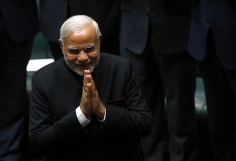
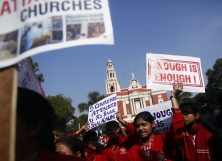
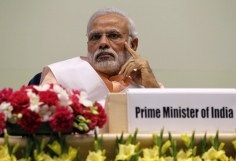
After his months-long silence following the attacks against Christian churches throughout India, Modi spoke during the canonisation of two new Indian states on Tuesday, vowing that his government will not tolerate violence against any religion on any pretext and that they will react "strongly" against such attacks.
"My government will ensure that there is complete freedom of faith and that everyone has the undeniable right to retain or adopt the religion of his or her choice without coercion or undue influence," Modi told the gathered Christians.
Several parties have interpreted the comments as PM Modi's vow of protection for the interests of minorities in India, including Christians. However, Hindu nationalist group Vishwa Hindu Parishad's Joint General Secretary Surendra Jain told the Times of India (TOI) that the Prime Minister's words were actually meant for "Christians who have been attacking Hindus".
"The Prime Minister did not say 'minorities' nor did he mention any particular religion. The news traders are misreading his message to suit their agenda," Jain said.
"The supposed attacks on churches have been going on for a while now but the PM never came out and spoke," the VHP Secretary added.
He then said that Modi only spoke out after Delhi police reported attacks on 206 Hindu temples, and on the day that an Indian temple was attacked in the United States.
The Prime Minister, Jain claimed, was actually asking Christians to "respect the Hindu religion."
Jain also told Times of India that they will continue to wage their campaigns of 'ghar wapsi' and their protests of 'love jihad' since the Prime Minister had not specifically mentioned Hindu groups in his statement.
Ghar wapsi is the reconversion of non-Hindus back to Hinduism, while love jihad is a practice by Muslim males to target non-Muslim women for conversion to Islam by appealing to their emotions.