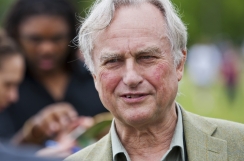
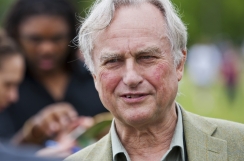
Richard Dawkins says Christianity is world's best defence against radical Islam

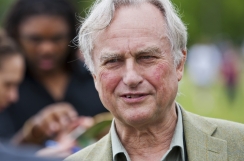
Despite spending years criticising Christianity, well-known atheist Richard Dawkins is now admitting that Christianity is much better than Islam.

Dawkins even conceded that "Christianity may actually be our best defence against aberrant forms of religion that threaten the world," according to The Gospel Herald.

Dawkins noted that Christianity, unlike Islam, does not make use of violent methods to fulfill its teachings. "There are no Christians, as far as I know, blowing up buildings. I am not aware of any Christian suicide bombers. I am not aware of any major Christian denomination that believes the penalty for apostasy is death," he said.

He admitted that he has "mixed feelings" concerning the decline of Christianity, because this faith-based group might just be "a bulwark against something worse."

The atheist reasoned that he constantly attacked Christianity in the past simply because it is the religion he is most familiar with, having attended Christian schools while growing up. Even though he was born in Africa, Dawkins and his family moved to England when he was nine years old.

His disdain towards the religion might have stemmed from the sexual abuse he encountered in school, although he used to say: "Horrible as sexual abuse no doubt was, the damage was arguably less than the long-term psychological damage inflicted by bringing the child up Catholic in the first place."

Because of his parents' deep love of science, Dawkins followed suit and pursued the field of biology. Even though Dawkins appears to be a logical-thinking scientist, the atheist argues that he is often misunderstood by the media and the public.

"I seem to be perceived as aggressive and strident and I don't actually think I am strident and aggressive. What I think is that we have all become so accustomed to seeing religion ring-fenced by a wall of special protection that when someone delivers even a mild criticism of religion, it's heard as aggressive when it isn't. I like to think I'm more thoughtful and reflective," he said.


Newsletter Stay up to date with Christian Today
related articles
Richard Dawkins calls Ben Carson a \'disgrace\' for belief in creationism
Richard Dawkins calls Ben Carson a 'disgrace' for belief in creationism

Richard Dawkins calls Ben Carson a 'disgrace' for belief in creationism

Dawkins, Paris and Digital Luminaries: How Paris calls us to a different way of being on social media

Dawkins, Paris and Digital Luminaries: How Paris calls us to a different way of being on social media

Dawkins denies comparing 'clock boy' Ahmed Mohamed to ISIS child killer

Dawkins denies comparing 'clock boy' Ahmed Mohamed to ISIS child killer

Richard Dawkins defends Donald Trump\'s right to free speech
Richard Dawkins defends Donald Trump's right to free speech

Richard Dawkins defends Donald Trump's right to free speech

Atheism: Just one false god among many, and not the most dangerous

Atheism: Just one false god among many, and not the most dangerous

News
Pope Leo XIV listed among Time’s 2026 100 most influential people

Pope Leo XIV has been included in Time magazine’s annual list of the 100 most influential people in the world, marking another milestone in the early months of his historic papacy.

The backstory to St George and his flag

23 April marks St George’s Day, which often passes unnoticed. But who was St George and why is he England's patron saint? This is the story …

Dear Saint George: A letter to England’s patron saint

Peter Crumpler shares his appreciation for England's patron saint.

Baroness Scotland urges people of all faiths to support religious freedom

Two thirds of people worldwide are believed to live in countries with no, or limited, religious freedom.