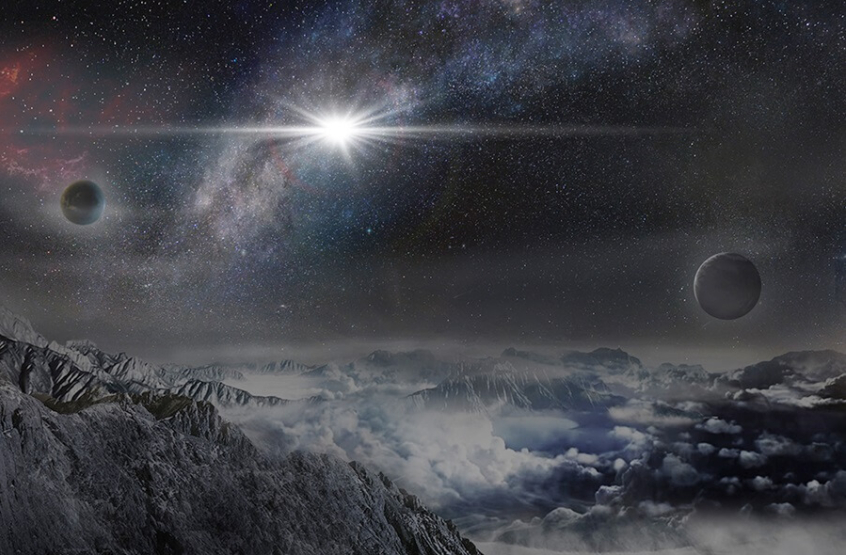
We may not have noticed it on Earth, but in space, an extremely powerful explosion recently took place that has left scientists stunned.
In study published last Jan. 15 in the journal Science, space researchers reported having spotted from across the universe a record-shattering supernova or star explosion that is 570 billion times brighter than the sun.
The massive supernova, officially named ASASSN-15lh and given the catchy nickname "Assassin," was reported to have released energy 200 times more than the normal stellar explosion and emitted brightness twice that of the previous record-holder.
Because of its sheer intensity, the stellar explosion—first observed in June 2015 by twin telescopes in Cerro Tololo, Chile—was classified under the category of "superluminous supernovae."
Subo Dong, an astronomer from the Kavli Institute for Astronomy and Astrophysics at Peking University in China, said this massive supernova has broken all existing records.
"ASASSN-15lh is the most powerful supernova discovered in human history," Dong said in an interview with National Geographic.
Dong explained that it would take some 90 billion years for our own sun to match the energy produced by the record-breaking supernova.
So why was the "Assassin" this powerful? Its discoverers believe that this is because of the fact that it was born of an extremely massive star—more massive than what had been thought possible.
After the star's violent explosion and death, it left behind a highly magnetised, rapidly spinning neutron star, which is incredibly spread 10 miles across the universe.
Although the "Assassin" produced so much energy and brightness, it will not have an effect on Earth, since the stellar explosion took place billions of light years away from our planet.
Nevertheless, space enthusiasts can turn their attention to another supernova remnant in the constellation Taurus that can easily be spotted at this time of year by just using simple binoculars and telescopes.
This supernova remnant, the Crab nebula or Messier 1, is visible in the evening southern sky for observers in temperate northern latitudes.
The Crab nebulla, named as such because it resembles a ghostly crab, is located 6,000 lights-years from the sun. It is a remnant of a supernova that took place a millennium ago.