Horror stories of Wall Street bankers jumping to their deaths made headlines in the wake of the 2008 recession, and shocking new research reveals that the economic crisis resulted in over 10,000 suicides.
The BBC reports that a study compiled by the University of Oxford and the London School of Hygiene & Tropical Medicine has found that the number of suicides has "risen markedly" in Europe, the US and Canada since the market crashed.
Though suicide rates had previously been in decline in both Europe and Canada, the former saw a 6.5 per cent increase in 2009, lasting until 2011; the equivalent of almost 8,000 additional suicides.
An extra 240 suicides than would otherwise have been expected took place in Canada, while suicide rates also "accelerated" in the US, which was already experiencing increased numbers before the recession, leading to 4,750 more suicides.
"It's a fairly large and substantial increase over what we would have expected. There are, broadly speaking, large mental health implications of the economic crisis that are still being felt by many people," explains Dr Aaron Reeves of Oxford University.
"There's a lot of good evidence showing recessions lead to rising suicides," he told the BBC.
However, researchers found that some countries showed no marked increase in suicides, despite the economic downturn, which the study attributes to good policies and schemes specifically set up to help those most affected by the crisis.
Austria, Sweden and Finland each retained their usual suicide rate – "One of the features of these countries is they invest in schemes that help people return to work, such as training, advice and even subsidised wages," Dr Reeves noted.
Dr David Stuckler, an Oxford Professor cited as the study's senior author, added that this proves that "economic suicides are avoidable".
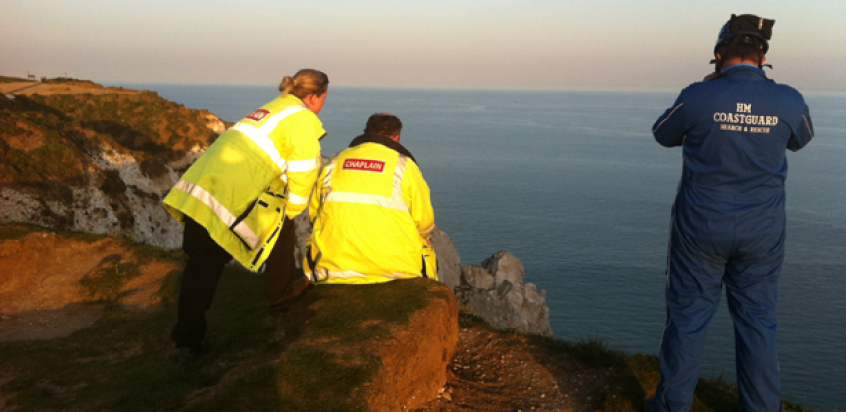
Despite these harrowing statistics, however, a vital service in the UK, where chaplains specifically reach out to suicidal people, is facing closure due to lack of funding.
The Beachy Head Chaplaincy team, which patrols 24/7 to help rescue those who come to commit suicide on the picturesque but deadly chalk headland in East Sussex – featuring a stomach-lurching 500 foot drop – provides a vital service, but the dedicated team of Christians simply don't have the money to continue.
An average of 30 people commit suicide on the headland each year, though this number would be far higher without the efforts of the chaplaincy team; in April alone they were involved in 79 incidents, and recued 38 despondent or suicidal individuals.
The desperate financial situation has led director Mark Pybus to give the team's first ever interview. He told the Telegraph: "I do believe that more lives will be saved if we talk about this and get the financial help we need to continue".
He also shared of his team's Christian ethos – only believers can train. "We pray before every single session, to be in the right place in the right time with the right words. We believe you need to be Christian to do that," he explained, adding that the "best place" for chaplains to receive the care and support they themselves need is "within a small group in a local church".
"We are out saving lives 24 hours a day," Pybus said.
"Unless we can get some significant funds by the end of the month, this service will have to end and we won't be here to save lives in the future."
To donate to the Chaplaincy Team at Beachy Head, click here.