The Evangelical Alliance has said that proposals by the Government to introduce a commission on extremism duringtoday's Queen's Speech 'raise more questions than they answer' because of possible threats to 'freedom of ideas'.
Theresa May's Government is expected to introduce plans for the extremism commission in the Queen's Speech today following the recent terrorist attacks in Westminster, Manchester, London Bridge and Finsbury Park.
The Evangelical Alliance's head of public policy Simon McCrossan praised the work of the police but said: 'Proposals from the Government to introduce an extremism commission raise more questions than they answer.'
Hinting at possible threats to the freedom of expression of conservative Christians, McCrossan said that the Government has failed to define extremism. 'The Government has tried and failed in recent years to define extremism in a way that tackles terrorism and its causes without restricting freedom of ideas which may be unpopular or contentious,' he said. 'Violent extremism is a scar on our communities and a threat to our security, but it is not solved by shutting down peaceful freedom of expression.
'Last year, the Home Office minister Karen Bradley MP provided 10 different definitions of extremism to the Joint Committee of Human Rights. It is a matter for Parliament to define with legal certainty what extremism is and, importantly, what it is not. The proposed commission must not become a means of bypassing democratic scrutiny and debate about an elusive term which potentially affects the human rights and civil liberties of all.'
McCrossan also said that instead of new proposals, existing laws should be used in full. 'Our existing laws include wide ranging powers to tackle terrorism and to prevent inciting violence: these need to be used to their full extent. The government has failed to show the gap in its legislative armour and are at risk of appearing to remedy the current situation with more powers that may do more harm than good.
'We hope that the powers of the extremism commission will be clearly defined, and that any definitions of extremism will be clearly the responsibility of parliament.'
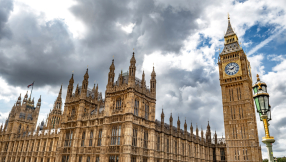
The Queen's Speech begins at 11.30am today and will then be debated in Parliament over the coming days. It comes amid speculation that May's Conservative party has failed so far to agree terms with the Democratic Unionist Party (DUP) for the DUP to support the Government's legislation being pushed through the House of Commons.