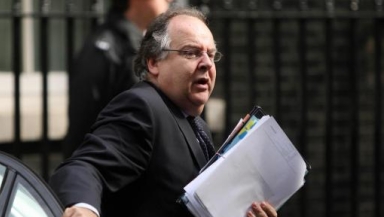
As Lord Falconer's Assisted Dying Bill returns to the House of Lords to be scrutinised by peers, its opponests are protesting outside parliament.
Christian Concern are holding a 'Not Dead Yet' rally to highlight those they claim coud be made vulnerable under the proposed legislation.
175 amendments have been submitted to Lord Falconer's bill, which was originally tabled in July. The legislation would make it legal for doctors to prescribe terminally ill patients with lethal doses of drugs upon request.
It has attracted significant debate across the UK, where it is currently an offence to encourage or assist suicide.
A national poll earlier this year found that 80 per cent of people are in favour of changing the law, despite reservations from medical professionals and faith groups that such measures would weaken sanctions that safeguard vulnerable people.
Chair of the British Medical Association (BMA) council, Dr Mark Porter, said in July that the association is "firmly opposed to legalising assisted dying".
"This issue has been regularly debated at the BMA's policy forming annual conference and recent calls for a change in the law have persistently been rejected," he said. "Our focus must be on making sure every patient can access the very best of palliative care, which empowers patients to make decisions over their care."
However, The British Medical Journal, which is owned by the BMA, published an editorial insisting that terminally ill patients should be granted the right to end their lives.
"People should be able to exercise choice over their lives, which should include how and when they die, when death is imminent," the paper argued.
"In recent decades, respect for autonomy has emerged as the cardinal principle in medical ethics and underpins developments in informed consent, patient confidentiality, and advance directives. Recognition of an individual's right to determine his or her best interests lies at the heart of efforts to advance patient partnership.It would be perverse to suspend our advocacy at the moment a person's days were numbered."
The Church has positioned itself against assisted dying. Archbishop Justin Welby wrote in The Times in July that measures to promote assisted dying could mean vulnerable people are pressured into ending their lives.
"What sort of society would we be creating if we were to allow this sword of Damocles to hang over the head of every vulnerable, terminally ill person in the country?" he asked, arguing that Lord Falconer's bill is "naive" for assuming that protections will be sufficient to prevent this from happening.
"Abuse, coercion and intimidation can be slow instruments in the hands of the unscrupulous, creating pressure on vulnerable people who are encouraged to 'do the decent thing'," Welby said.
Additionally, a statement signed by more than 20 British faith leaders, including Colonel David Hinton, Chief Secretary of The Salvation Army, Archbishop of Westminster Cardinal Vincent Nichols and Dr Shuja Shafi, Secretary General of the Muslim Council of Britain, warned that if written into law, the bill "would have a serious detrimental effect on the wellbeing of individuals and on the nature and shape of our society".
It also highlighted the "intrinsic value" of human life, which "ought to be affirmed and cherished".
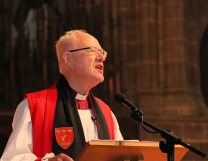
However, former Archbishop of Canterbury George Carey this year made the surprise announcement that he is in favour of the bill.
"Old philosophical certainties have collapsed in the face of the reality of needless suffering," Carey wrote in the Daily Mail.
"Today we face a terrible paradox. In strictly observing accepted teaching about the sanctity of life, the Church could actually be sanctioning anguish and pain - the very opposite of the Christian message. Indeed, there is nothing anti-Christian about embracing the reforms that Lord Falconer's Bill offers."