Today marks the official end of one of the most destructive conflicts in European history and religion was at the heart of it.
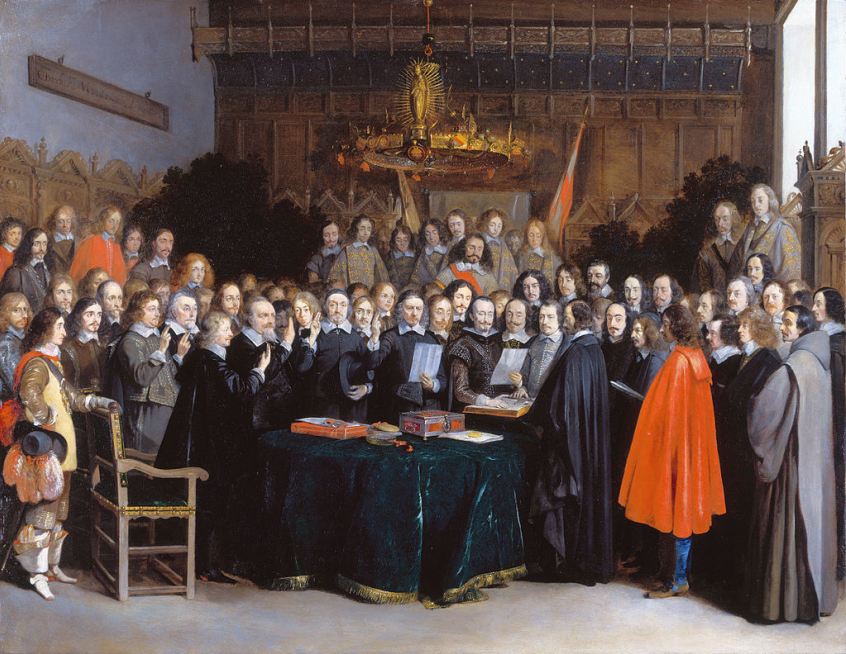
The Treaty of Westphalia was signed October 24, 1648, and ended the Thirty Years War. The war began in 1618 when the Catholic Hapsburgs tried to crush the Protestants in Bohemia (now part of the Czech Republic). A series of devastating conflicts spread across what is now Germany. The area was reduced to a wasteland. Some regions lost as much as three-quarters of their population due to massacre, starvation and disease. As well as the great armies of France, Spain and Sweden, roving bands of mercenaries spread terror.
'We live like animals, eating bark and grass,' says one entry in a family Bible from a Swabian village. 'No one could have imagined that anything like this would happen to us. Many people say that there is no God...'
There were even cases of cannibalism.
Some of the great hymns we still sing today come out of this period, including Martin Rinkart's Now thank we all our God. A Lutheran pastor in Saxony, he found himself conducting 50 funerals a day before the death toll became too great and the corpses were thrown into pits. On one occasion a Swedish army was besieging his city and demanded a huge ransom to leave. Rinkart went out to plead with them and they withdrew.
Another dreadful consequence of the war was a rise in the persecution of 'witches', blamed for the evils that had come upon the land; many thousands of innocent people were tortured and burned alive.
The Treaty of Westphalia was the culmination of a series of agreements that brought an end to the carnage. It meant all parties would accept the Peace of Augsburg of 1555, which gave each ruler the right to determine the religion of his own state, and stopped attempts by Catholic powers to enforce their faith on Protestants. As well as a territorial realignment giving independence to Switzerland and Holland, Christians whose Church was a minority in the state where they lived would have the right to worship.