Everyone knows Jesus was born in a stable and laid in a manger.
It's a version of the Christmas story that's become sanctified by centuries of tradition and reinforced every time we read Luke's Gospel. In the popular New International Version it reads: '[Mary] gave birth to her firstborn, a son. She wrapped him in cloths and placed him in a manger, because there was no room for them in the inn' (Luke 2:7).
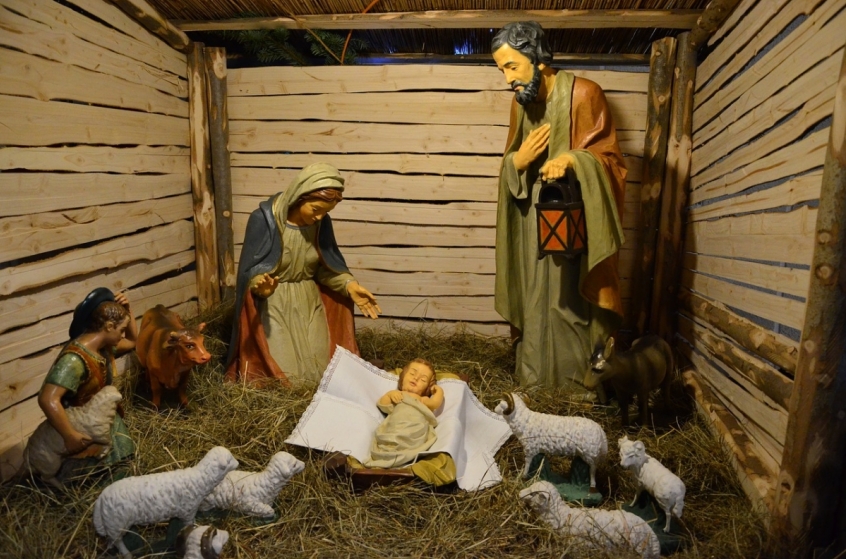
The grumpy innkeeper yelling 'No room!' is a fixture in Christmas sketches. The ox and ass bow before the Lord Jesus in the carol. Children's nativity plays include any number of sheep and assorted animals; it's a stable, after all.
If we have a picture of it in our minds, it might be of an old English inn with a lean-to stable on the side. In the main building everything's light and warm, full of good cheer and singing. The stable is dark and cold; Jesus is on the outside. It's the story of his life, prefigured in his very first hours.
But what changes if it wasn't like that after all?
In his book Jesus Through Middle Eastern Eyes, Kenneth Bailey takes issue with the traditional view. He points out that the traditional Palestinian village home had two rooms – the 'best' room for guests, and the main family room where everyone slept, including the animals. They were brought indoors at night because their body heat kept the room warm, and for their own safety. At one end of the room there were mangers for them, either raised or let into the floor.
It's in this room that Jesus was born, he says – among a welcoming family.
But what about the 'inn'? It's a mistranslation. The Greek word for a public inn is pandocheion (like the inn the Good Samaritan took the injured man to). In Luke though it's katalyma, a 'place to stay'. That's the word used for the 'guest room' or 'upper room' in Luke 22:10-12 where Jesus was to eat the Last Supper with his disciples. It was the guest-room of a friend or relative with whom the family stayed that was already occupied, not the 'inn'.
What about the shepherds who first came to worship him? Bailey has a beautiful suggestion. Shepherds ranked very lowly in the social scale at that time. They might have expected to be turned away from the house of the Messiah. But instead they were welcomed in, just as they were. So, he says: 'The unclean were judged to be clean. The outcasts became honoured guests. The song of the angels was sung to the simplest of all.'
'Jesus Through Middle Eastern Eyes' is published by SPCK.
Mark Woods is the author of Does the Bible really say that? Challenging our assumptions in the light of Scripture (Lion, £8.99). Follow him on Twitter: @RevMarkWoods