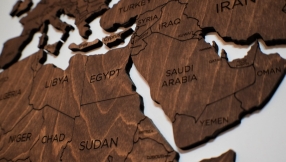
A humanitarian relief team just back from central Nigeria reports that violence against Christians by Islamist terrorists "has displaced millions" and "may rise to the level of ethnic cleansing or even genocide".
The team including Baroness Cox, founder president of Humanitarian Aid Relief Trust (HART), "witnessed the ruins of homes, farmland, food stores, churches, pastors' homes and an orphanage" attacked by the Muslim Fulani militia "in the past seven months".
The Joint Visit Report from HART, the International Organisation for Peace Building and Social Justice UK (PSJ-UK) and Christian Solidarity International (CSI) said that the perpetrators of these attacks "are rarely, if ever, brought to justice".
In her foreword to the report, "Breaking Point in central Nigeria? Terror and Mass Displacement in the Middle Belt", Baroness Cox said she had visited Nigeria many times, but during her visit earlier this month she was advised for the first time to fly from the Nigerian capital, Abuja, to Jos, the capital of the Plateau state, rather than travel by road.
This was "due to the increased frequency of killings and kidnappings – another indication that security is worsening in central states".
The team heard detailed accounts of the "deliberate targeting and slaughter" of many children, a brutal attack on a 98-year-old woman who was burned alive, and people being hacked by machetes as they ran from rapid gunfire.
"The cache of weapons employed by Fulani militia includes automatic weapons, laser sights, machetes, petrol bombs, and incendiary chemicals used to burn houses," the report says.
"Many international activists and leaders on the ground in the Middle Belt use the word 'genocide' to describe the attacks on their communities.
"As far back as 4 July 2018, the Nigerian House of Representatives declared killings in predominantly-Christian villages in Plateau state to be a genocide and called on the Federal Government to establish immediately orphanages in areas affected by violence. Yet their urgent plea was ignored."
During their visit, human rights lawyer Emmanuel Ogebe, representing Justice for Jos, told the team: "No one is held to account for atrocities. We are repeating the same playbook as Rwanda. We are going down the same path. We are heading towards breaking point.
"I don't know how to emphasise the emergency anymore. The Rwandan genocide was first labelled a 'farmer-herder conflict', and look what it became. Rwanda is the size of a Nigerian state. The world will not be able to cope with the consequences."
In its recommendations, the report calls on the Nigerian authorities to "end impunity by ensuring that complaints related to human rights violations are promptly, independently and impartially investigated, and those responsible are held to account after fair trials."