The number of fatalities resulting from attacks in Nigeria on 26 January has risen to at least 138.
Islamist terror group Boko Haram, officially labelled a 'Foreign Terrorist Organisation' by the US government in November last year, is suspected to have coordinated the violence.
'Boko Haram' translates as 'Western education is sacrilege'. The group has ties to Al-Qaeda and is responsible for over 2,000 deaths in Nigeria since 2009. Its leadership has declared it aims to cleanse the country of Christians, eradicate Nigerian democracy and replace it with an Islamic state guided by Sharia law.
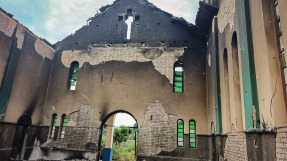
On Sunday, armed militants attacked a church in Adamawa State in the north-east of the country. They locked the doors before the end of the service and shot at the congregation, slitting the throats of those who tried to escape. They also detonated bombs before going on a four hour rampage, burning houses and taking hostages from the village.
Initial reports recorded 22 casualties. However, that number has now risen to 53, with dozens more wounded.
On the same day, the Islamist group carried out another vicious attack in Kawuri Village, in neighbouring Borno State. Militants shot men, women and children as a busy weekend market was packing up, and set fire to over 300 homes. Many victims are now reportedly unrecognisable due to terrible burns.
A 46-year-old grandmother, Rabi Mallam, hid her son and granddaughter under a blanket soaked in water as members of the extremist sect set fire to their hut, but they were still badly burned.
"I cried for the children because they were calling me to take them out, but I could not," she remembers.
A total of 85 people perished in the attack, and at least 40 remain hospitalised. However, 16 people are still missing, so the death toll is expected to increase.
President Goodluck Jonathan declared a state of emergency in Muslim-majority Adamawa, Borno and Yobe states in May 2013, and has authorised an increased military presence to tackle the ongoing violence.
However, government troops have so far been unsuccessful in quashing the extremist group's terror activities. Boko Haram has recently shifted its attacks from urban areas to rural communities, often targeting churches, highways and schools.
Within the last week alone, 37 communities in Damboa, Konduga and Gwoza areas have been subjected to terrorist attacks, and over 200 people have died in the past month at the hands of militants.
Christian Solidarity Worldwide has urged the Nigerian government to do more to combat extremism across the nation, particularly in rural communities which often suffer "devastating violence".
In addition, Chief Executive Mervyn Thomas has appealed to bordering nations to coordinate with Nigerian authorities in stopping militants from fleeing the country and avoiding capture, which is unfortunately commonplace.
"If this tendency is not addressed effectively, it will ultimately undermine peace and security in the entire region," he warns.