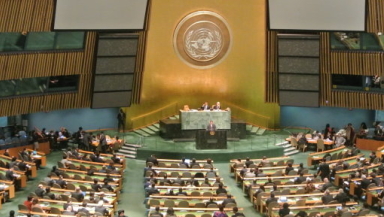
A team of researchers at the University of Kent say representation at the United Nations is not religiously diverse enough.
They conclude from research that Christian NGOs are overrepresented at the UN in comparison to other religious groups.
The team of professors completed a study looking at the range of religious NGOs at the UN and found that over 70 per cent of them were Christian.
They say a lack of funding is limiting other religious groups from establishing NGO work within the United Nations.
In a report, they call for greater awareness, transparency and equality with regards to the operation of religious NGOs, and a greater emphasis on encouraging religious tolerance and diversity within the UN and peacemaking processes.
Muslims have found alternate means of representation through the collective of states in the Organisation of Islamic Cooperation, rather than civil society NGOs, which the report states are largely Catholic.
However they warn that Hinduism and Buddhism are especially underrepresented, and that funding is a "major issue in preventing their equal access".
Professor Carrette, Head of the Department of Religious Studies at the University of Kent, said: "In the season of peace and goodwill, it would seem there needs to be more of a 'global goodwill' to make the UN system work for all religions equally and for religions to follow and share equally UN goals for peace and justice."
She stresses that "structural and historical differences" must be addressed.
"Religions form an important part of international global politics and in a global world we need to establish a new pluralistic contract for equal access for all religions to the UN system.
"This must also entail religious groups working towards the ideals of the UN, in terms of human rights, fairness and justice for all men and women."
Religious NGOs form less than eight per cent of the total of consultative status NGOs at the UN. They are considered to be very active though, and some religious NGOs have a far greater influence than their size might suggest. Among the most active, according to the researchers, are Catholics, Quakers and the Baha'i faith, who they note meet more frequently with UN diplomats.